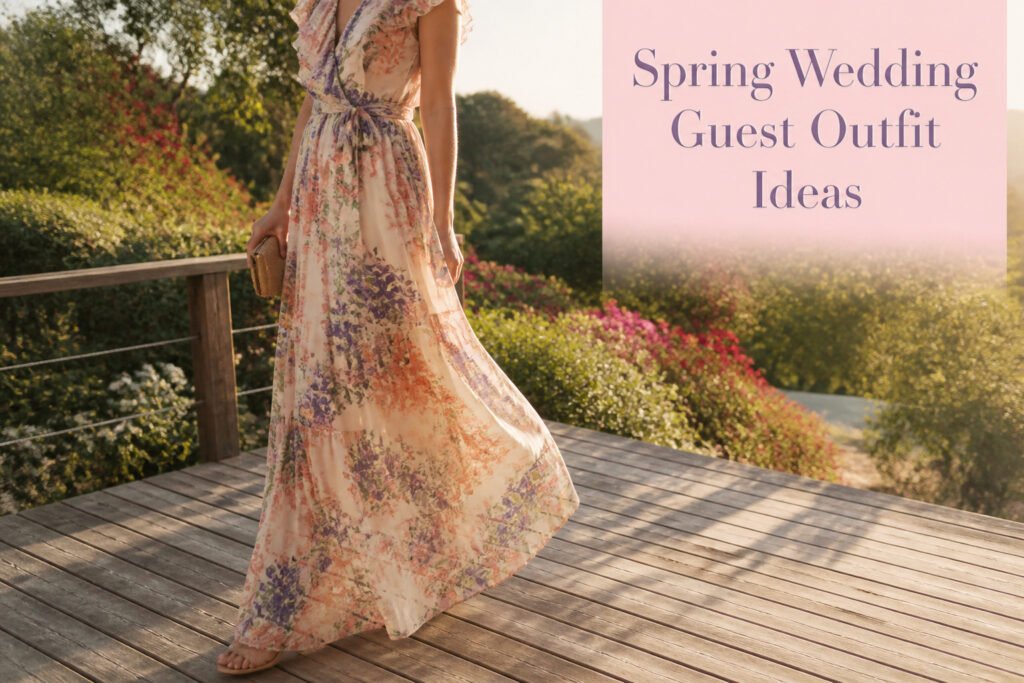
Spring wedding guest outfit ideas start with knowing the venue: grass, gravel, and unpredictable May weather change what actually works. A floral maxi dress covers you for outdoor ceremonies, but the Zimmermann Awaken at $1,450 only earns its price if you attend at least two spring weddings a year. The real mistake is over-accessorizing; let the print do the work.
Floral Maxi Dress

A floral maxi dress gives you the coverage and movement that outdoor ceremonies actually need. The full length keeps you from worrying about grass stains or uneven ground, and the fabric catches the breeze in a way that reads as intentional, not accidental.
Vogue singled out Zimmermann’s Awaken maxi dress for this exact scenario: pastel palette, ruffled tiers in silk-blend crêpe de chine, built for garden fêtes and backyard nuptials alike. At $1,450 from NET-A-PORTER, it sits at the investment end, but the construction justifies the price if you attend even two spring weddings a year.
Garden fêtes, backyard nuptials, dreamy countryside destinations… wherever the wedding, you can’t go wrong with a flowery print for this time of year.
— Vogue
The mistake most people make is over-accessorizing. That print is doing the work. Keep jewelry minimal and let the pattern hold the room’s attention. For footwear, the Staud Sebastian mules at $396 hit the right balance: closed enough for stability on lawn, open enough for May warmth. Skip anything with a stiletto heel unless you enjoy sinking into turf.
The ruffled tiers move with wind rather than fighting it, which matters more than you’d think for outdoor photos. Pair with textured studs that pick up a color from the print itself, rather than introducing a new metal or competing stone.
Pastel Midi Dress
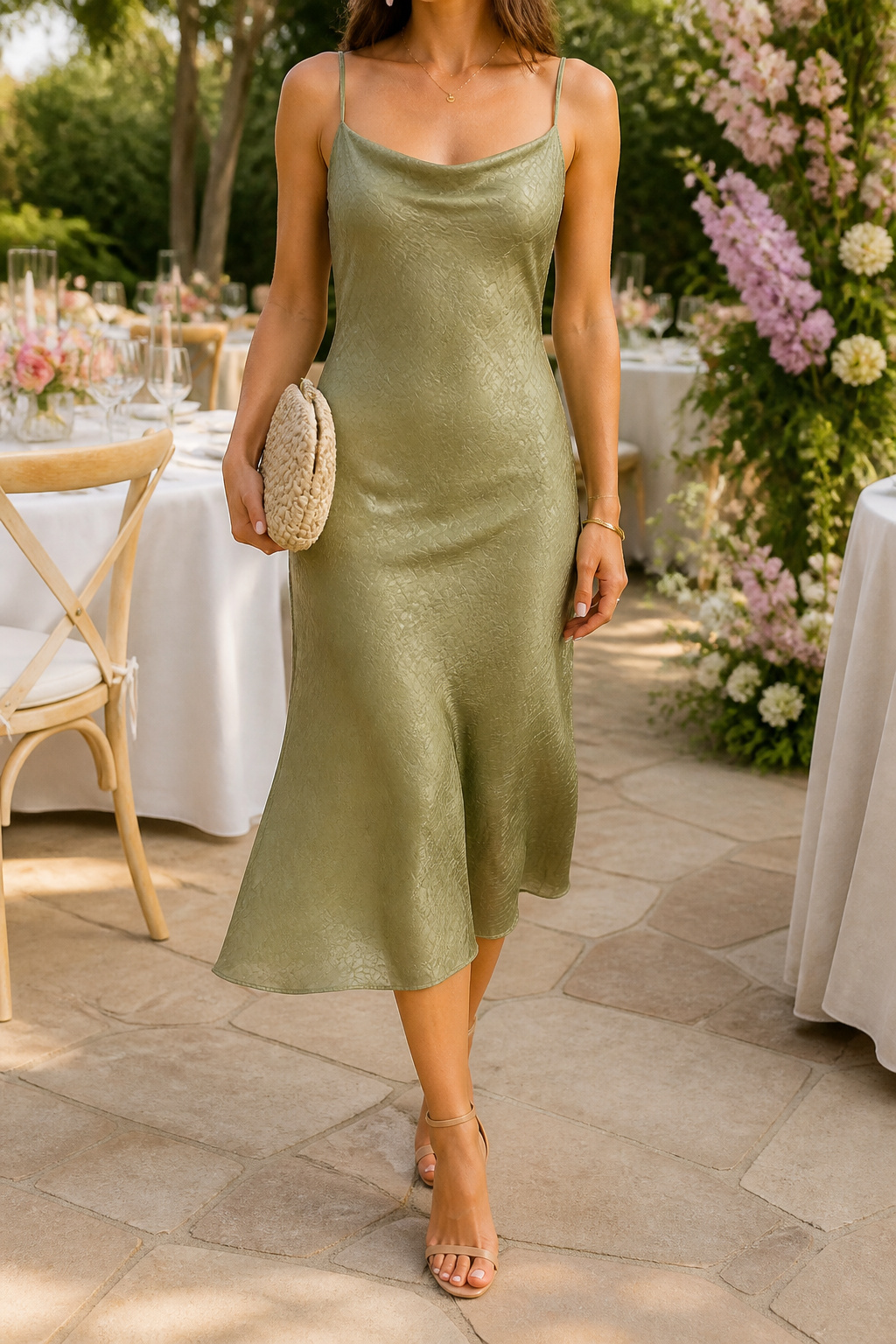
A pastel midi dress lands in the sweet spot for spring weddings because the length works across venues without second-guessing. You get enough coverage for a church ceremony and enough freedom to move at an outdoor reception on grass or gravel. The hem sits mid-calf, so you are not tugging at a mini on a windy lawn or drowning in floor-length silk at a casual garden party.
Color is where you signal spring without drifting into bridal territory. Pale pink, mint, lavender, and blush read as seasonal without demanding attention. These shades photograph softly in daylight and do not compete with white, ivory, or whatever the bride chose.
The Reformation Pamela Silk Slip Dress fits this slot precisely. It carries the same silhouette in olive silk with croc-embossed texture or chartreuse suede, and sources note it moves from black-tie receptions to intimate backyard ceremonies without looking wrong in either. That range matters when you have one wedding in a hotel ballroom and the next under a tent.
Elegant Gown
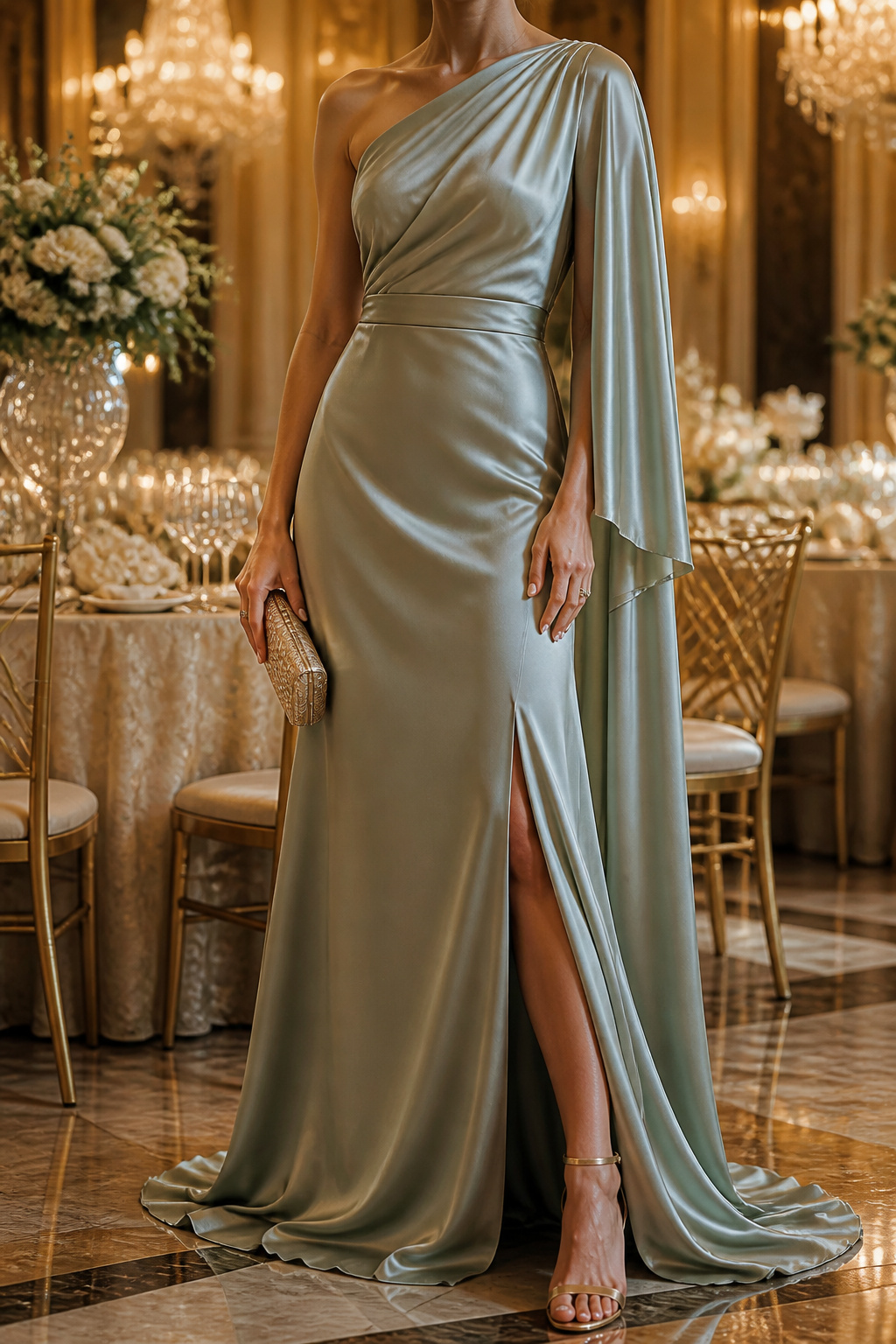
A floor-length gown is the baseline for any black-tie spring wedding, and the only choice that reads as fully prepared rather than borderline. You will know you need this level when the invitation states black tie or when the venue is an evening ballroom, a grand hotel, or a formal religious setting. Anything less reads as a guess.
The common mistake is treating spring as an excuse to go heavy. Velvet, thick brocade, or dense satin will leave you overheated and slightly out of step with the season. Chiffon, lightweight silk, or any fabric with a fluid drape keeps the formality without the weight. TWP’s strapless gown with metallic thread woven through it is the right kind of example: the shimmer carries the dress code, but the cut and material move easily in warmer air.
Color and pattern need the same restraint. A sleek silhouette in a solid, sophisticated tone will outlast any trend. Save the bold experiments for cocktail attire; here they risk looking like you misunderstood the assignment.
Two-Piece Set

A coordinated two-piece set lands differently than a dress because you chose it deliberately, not because you couldn’t find anything else. The gap between intentional and mismatched is narrow. Match the fabric weight and finish exactly: a linen skirt with a linen blazer works, but a linen skirt with a crepe top reads like you grabbed what was clean.
The real payoff is fit flexibility. A dress binds at one measurement and the whole garment fails. Separates let the waist and hips operate independently, which matters if you sit through a long ceremony and stand for cocktails after. You also rewear the pieces. The skirt sees a summer dinner; the top works with white jeans. That math changes what you spend.
This option shows up less often than dresses in wedding roundups, so you will not look like you copied the same Pinterest board as half the guests. The risk is looking office-appropriate rather than occasion-appropriate. Avoid anything that buttons like a suit jacket. Soft closures, a little drape, and color in the terracotta or dusty blue range keep it out of conference room territory.
Casual Short Dress
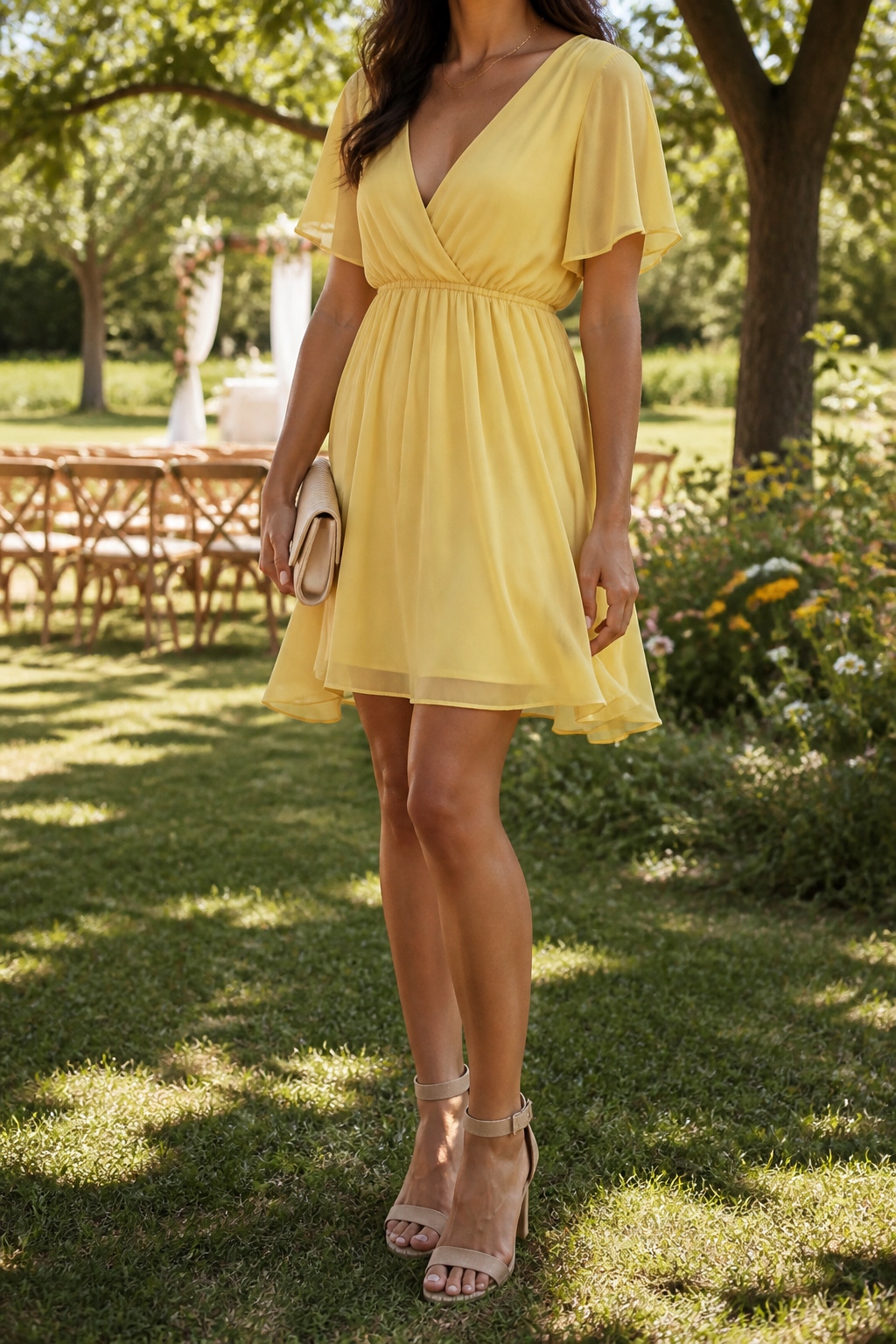
A short dress is a real option for spring wedding guest outfit ideas, but it lives or dies by the dress code printed on the invitation. If the couple asks for casual attire, or if the ceremony is outdoors in the afternoon sun, a mini or knee-length hemline keeps you cool and lets you move on grass or gravel without fuss. The line between casual and underdressed is thinner than most people think. A breezy chiffon number in a turmeric or other vivid hue reads intentional, a cotton sundress you threw on reads like you forgot the event was happening. Keep the length at or just above the knee, especially for daytime, and let the fabric do the work of dressing it up.
Platform heels and oversized gold hoops can push the look toward retro for a city-hall ceremony or a more relaxed reception. Linen or chiffon sets the right seasonal tone, flowing rather than clinging, and holds up better once the temperature climbs. Avoid anything that feels beach-bound unless the word "beach" actually made it onto the wedding website. When the invitation gives you no guidance, aim slightly more formal rather than less. A short dress that is almost too dressed up still works; one that is almost too casual becomes the thing people notice in the photos.
Light Blazer with Chinos

A lightweight blazer with chinos is the combination that carries you from a cocktail reception straight through to a casual garden ceremony without looking like you misread the invitation. The blazer weight matters most here. You want something breathable, partially lined or unlined, in a fabric that moves air: linen, cotton blends, or seersucker work best for spring heat, especially outdoors. Light gray, pastel blue, beige, or khaki read seasonal without shouting for attention.
For chinos, slim or tailored fit keeps the pairing sharp. Relaxed fit only works for truly casual weddings, and even then the line between relaxed and baggy is easy to cross. Lighter shades, beige, khaki, soft pastels, match the spring setting; navy or charcoal shift the same outfit toward evening events.
Where this combination stumbles is in assuming one blazer handles every dress code. A structured cotton blazer in khaki with tailored chinos clears cocktail attire if the shirt and shoes hold up their end. Swap to a softer, more unstructured cut and you are squarely in casual territory. The same two pieces, read differently depending on how you press them and what you pair them with.
Dressy Jumpsuit
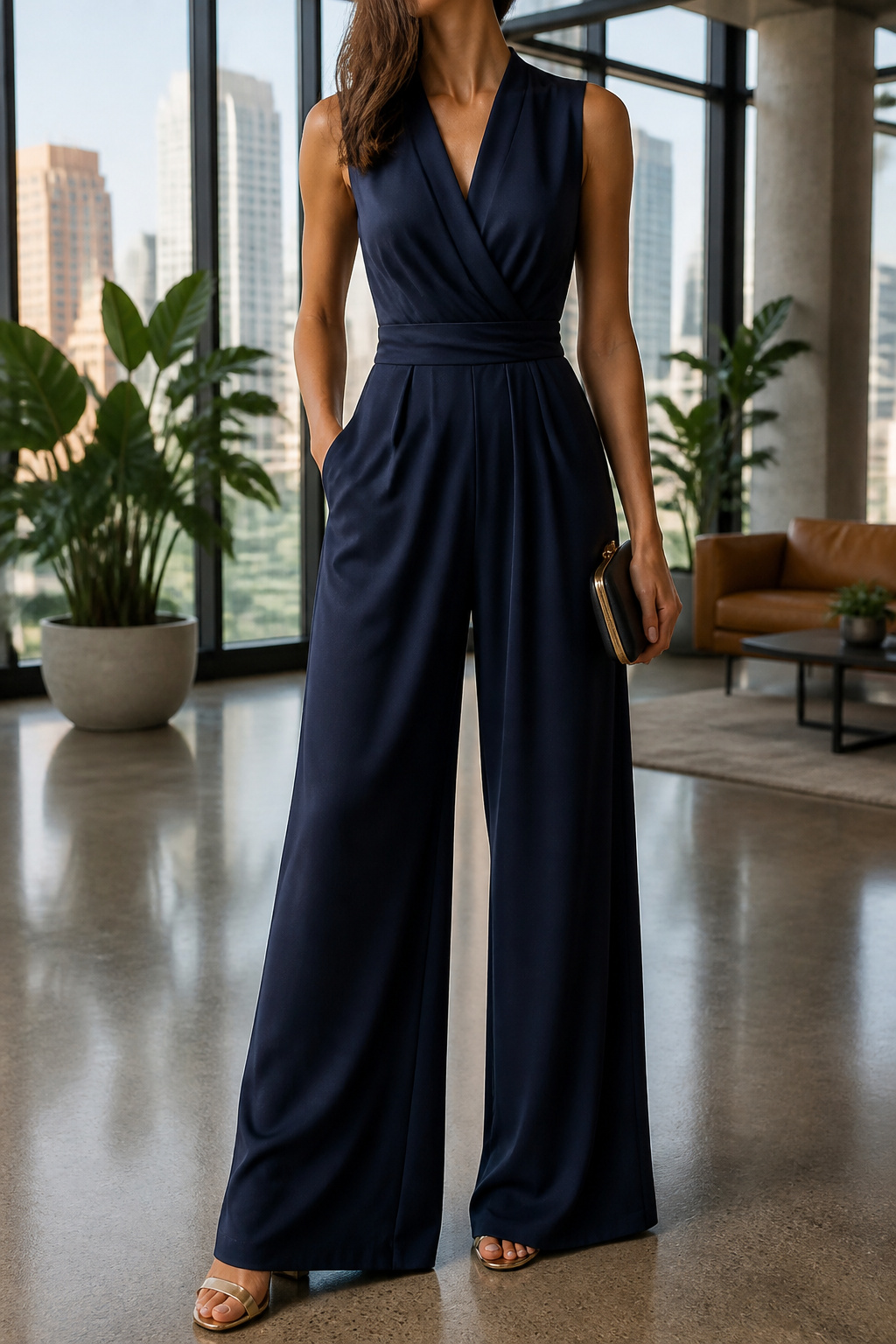
A dressy jumpsuit gives you the movement of a gown without the predictability of another floral dress in the crowd. For spring weddings, that matters: you want to feel the breeze, sit on grass without fuss, and still look like you understood the assignment.
What makes one dressy enough comes down to fabric and cut. Skip anything in cotton twill or jersey. Look for crepe, satin-back crepe, or a fluid silk blend that drapes rather than clings. A defined waist, whether from a tie, a seam, or a wrap detail, keeps the shape from reading as workwear. Wide legs that pool slightly over a heel read formal; tapered or cropped legs read office.
Fit issues catch people off guard here. The torso length is the make-or-break measurement. Too short, and you get a wedgie effect when you sit; too long, and the waist bags above your hips. If you are between sizes, buy for the length of your body from shoulder to crotch, then have the legs hemmed. Most alterations shops can take in or let out a waist, but they cannot add fabric to a bodice.
Spring is when this option shines. The single piece moves as one thing, which means no skirt twisting or top untucking between ceremony and dancing. You will also be one of few guests in pants, which lands as confident rather than underdressed when the fabric and fit are right.
Stylish Accessories

The clutch you carry matters more than you think. A small clutch in a complementary color keeps your hands free for champagne and your silhouette clean, while an elegant rattan tote reads too casual for most ceremonies and better suits a garden rehearsal dinner. For jewelry, bold earrings or a layered necklace add the right kind of noise, but one statement piece at a time is the rule that keeps you from looking like you are trying to outshine the couple. A bejeweled headband can work if your dress is simple; with a printed fabric, it fights for attention and loses.
Floral hairpins and delicate shawls are the seasonal touches that mark a spring wedding from any other date on the calendar. Pin one above your ear where it catches light during the ceremony, not tucked behind where the photographer misses it. A light, airy perfume with floral or citrus notes finishes the look without entering the room before you do. The line between enhancing and overwhelming sits at about three accessories total: count earrings as one, the clutch as two, and stop there unless the third is invisible like scent.
Reading the Dress Code

Black tie in spring means you show up in a floor-length gown or a tuxedo with a black bow tie, same as December, but the fabric and color shift. You will see women in sophisticated silks and lighter tones than the deep jewel tones of winter, and men sometimes swapping the standard black jacket for midnight blue. The formality does not drop just because the sun is out.
Cocktail attire loosens the length but keeps the structure: a tasteful midi dress or a shorter dress for women, a dark suit with a tie or bow tie for men. In spring, this is where pastels and floral prints start to work. A fitted midi in a vivid hue reads correct for a semi-formal daytime ceremony, while the same cut in black or navy would look more at home after dark.
Semi-formal is the code that shifts most with the season. Women can wear knee-length dresses or dressy separates; men can wear a suit in lighter tones or classic navy. For a spring wedding, a light gray or tan suit is fully appropriate here in a way it would not be in January, and women have more room to experiment with chiffon or linen without looking underdressed.
Casual, usually reserved for outdoor or destination weddings, still has a floor. Spring dresses and maxi skirts work for women; dress shirts with khaki pants work for men. Jeans and t-shirts stay home unless the invitation explicitly says otherwise. Lightweight materials like chiffon or linen keep you cool without crossing into sloppy territory.
Spring Fabrics That Breathe

Linen, cotton, and chiffon are the three fabrics you will see recommended most often for spring wedding guest outfits, and each earns that recommendation for different reasons. Linen handles heat and direct sunlight better than almost anything else, but it wrinkles the moment you sit down in the car and will keep wrinkling through the ceremony. That is not a flaw to hide; it is the texture of the fabric, and a pressed linen suit that loosens up by cocktail hour looks relaxed rather than sloppy. Cotton is steadier. It breathes well, holds a press longer, and works for structured pieces like blazers or shirtdresses that need to keep their shape through a long afternoon. The weight matters more with cotton than with the other two. A heavy cotton twill will trap heat, while a lightweight poplin or voile moves air almost as freely as linen. Chiffon is the outlier. It is synthetic or silk, sheer, and built for draping rather than structure. It breathes because it is thin, not because the fiber itself moves moisture well, and it clings to damp skin or undergarment lines if the lining is cut wrong.
In a store, you test these fabrics with your hands and with time. Crush a handful of the material in your fist for ten seconds, then release. Linen will look like a used paper bag; cotton will recover some; chiffon springs back but may hold static. Hold the fabric up to the store lights. If you can see the bulb clearly through two layers, that garment will offer no privacy or sun protection without a lining, which changes how it wears. Press the fabric against your wrist or neck, where your skin runs warmest, and wait. If it starts to feel clammy in under a minute, it will feel worse in a garden with no breeze.
Shoes for Grass and Dancing

You have three solid choices for spring wedding footwear, and the ground itself decides which one you bring.
Outdoor ceremonies on grass or packed earth are where a stiletto fails you. Every step drives a narrow heel into soft soil; by the cocktail hour you are walking on tiptoe with your shoes buried an inch deep. A wedge heel spreads your weight across the full sole of the shoe and keeps you level on uneven lawn, which is exactly why it has become the standard for garden weddings. You look dressed up and you stop sinking.
Block heels work on the same principle with a smaller footprint, and dressy strappy sandals trade that stability for air on the foot when the day turns warm. If the invitation reads formal, strappy sandals with a low block heel split the difference.
Ballet flats are the fallback for long receptions, but save them for semi-formal or casual weddings. On grass, a flat sole with no lift collects moisture the way a low wedge does not, and the hem of your outfit drags lower with every step.
Color and Pattern in Spring

Pastels read as cheerful without trying too hard, which is exactly the tone you want as a guest. A breezy flowy dress in a soft shade channels the season without announcing itself before you do. Floral patterns work the same way for outdoor garden weddings, though the trick is letting the print carry the look rather than adding busy jewelry. Keep it minimal, like textured studs with a single colored gem that picks up one tone from the dress.
The move into vivid hues takes confidence, not volume. A fitted midi in a saturated color, even something as bold as tomato red, works for a semi-formal daytime ceremony if the cut stays sleek and the accessories stay quiet. Black leather pieces pair unexpectedly well here rather than fighting for attention.
What separates celebratory from attention-seeking comes down to structure. Puff sleeves or a strong silhouette already say enough; you do not need the color to shout on top of that. And the hard limit never shifts: anything that drifts toward white or ivory territory is the mistake that overrides every other choice. If you are uncertain where the line sits, pick the deeper, clearer color and avoid anything cream-toned or close to undyed silk.
Frequently Asked Questions
What should I wear to a spring wedding?
Women should reach for a floral maxi dress, pastel midi, or elegant floor-length gown depending on the dress code; men should wear a light suit or blazer with chinos. Floral prints and soft shades like blush or mint read as seasonal without pulling focus from the bride. If the invitation says black tie, a full-length gown or tuxedo is non-negotiable even in warmer months.
What are the best fabrics for spring wedding guest outfits?
Linen, cotton, and chiffon are the three fabrics that earn their place for spring. Linen handles heat and direct sunlight better than almost anything else though it wrinkles freely; cotton holds its shape longer for structured pieces like blazers; chiffon drapes and breathes because it is thin, though it can cling without a proper lining. Test any fabric by crushing it in your fist for ten seconds and holding it to your wrist to see how quickly it turns clammy.
How do I choose the right shoes for a spring wedding?
Let the ground decide: wedge heels spread your weight across grass and packed earth so you stop sinking, block heels offer a smaller footprint with similar stability, and dressy strappy sandals work for formal settings with firm flooring. Save ballet flats for semi-formal or casual receptions, since their low soles collect moisture on lawn and let your hem drag with every step.