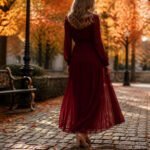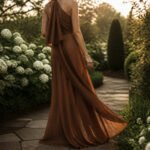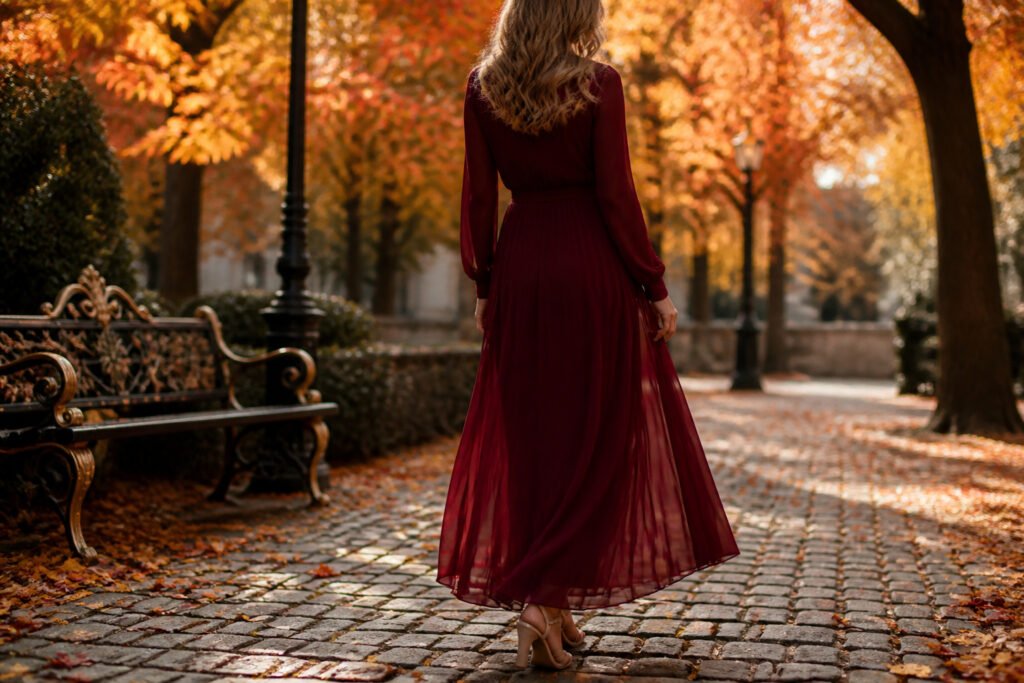
A fall wedding guest outfit is formal attire that adapts to dropping temperatures and shifting venues rather than a single dress code. The real difficulty is knowing whether the invitation calls for a floor-length gown, an elegant midi, or something that handles both a chilly ceremony and a heated reception. Adrianna Papell builds long-sleeve dresses specifically for this gap: fitted through the arm, finished at the wrist, so you are not shivering through vows or carrying a knit cover-up that breaks the line.
Long-Sleeve Formal Dresses

Long-sleeve dresses give you coverage that reads as formal, not apologetic when autumn air moves through an open barn door or lingers in a stone chapel. Lace, chiffon, and sheer fabrics each handle the practical need differently: lace adds weight without bulk, chiffon layers easily under a wrap, and sheer sleeves keep the line dressy while letting your own heat work.
For outdoor ceremonies, you get protection from a wind that picks up at four in the afternoon. Indoors, the same sleeves save you in rooms where the thermostat never quite matches the invitation’s elegance. Adrianna Papell builds these in styles from full lace to gowns with sheer sleeves and intricate detailing, which matters because a fall wedding often runs from a chilly ceremony straight into a heated reception. You want one dress that handles both without you carrying a separate layer or shivering through vows.
The mistake is treating sleeves as an afterthought and grabbing any knit cover-up from your closet. That breaks the formal line. Built-in sleeves keep the silhouette intentional: fitted through the arm, finished at the wrist, part of the dress rather than a patch on it.
Floor-Length Gowns

A floor-length gown is your most formal option in the fall wedding guest wardrobe, and it is the right choice when the invitation points toward black-tie or the venue itself demands elevation. Ballroom receptions, evening ceremonies in grand hotels, and any celebration where the couple has signaled serious formality are where this length earns its place.
You will know you have chosen correctly when the setting calls for refined, intentional dressing rather than merely festive. The gown carries the weight of the occasion in a way that a midi or cocktail dress does not, and in autumn you have more room to work with richer textures and deeper palettes than you might in warmer months without seeming overdressed. A vineyard wedding or an estate afternoon may let you step down to an elegant midi or a sophisticated satin style, but for the ballroom or black-tie evening, the full length is the safer and more appropriate bet.
The risk is showing up underdressed, not overdressed. If you are weighing whether the venue justifies the gown, the time of day and the formality of the invitation are your signals. Evening plus stated formal attire means commit to the floor.
Velvet Evening Dresses
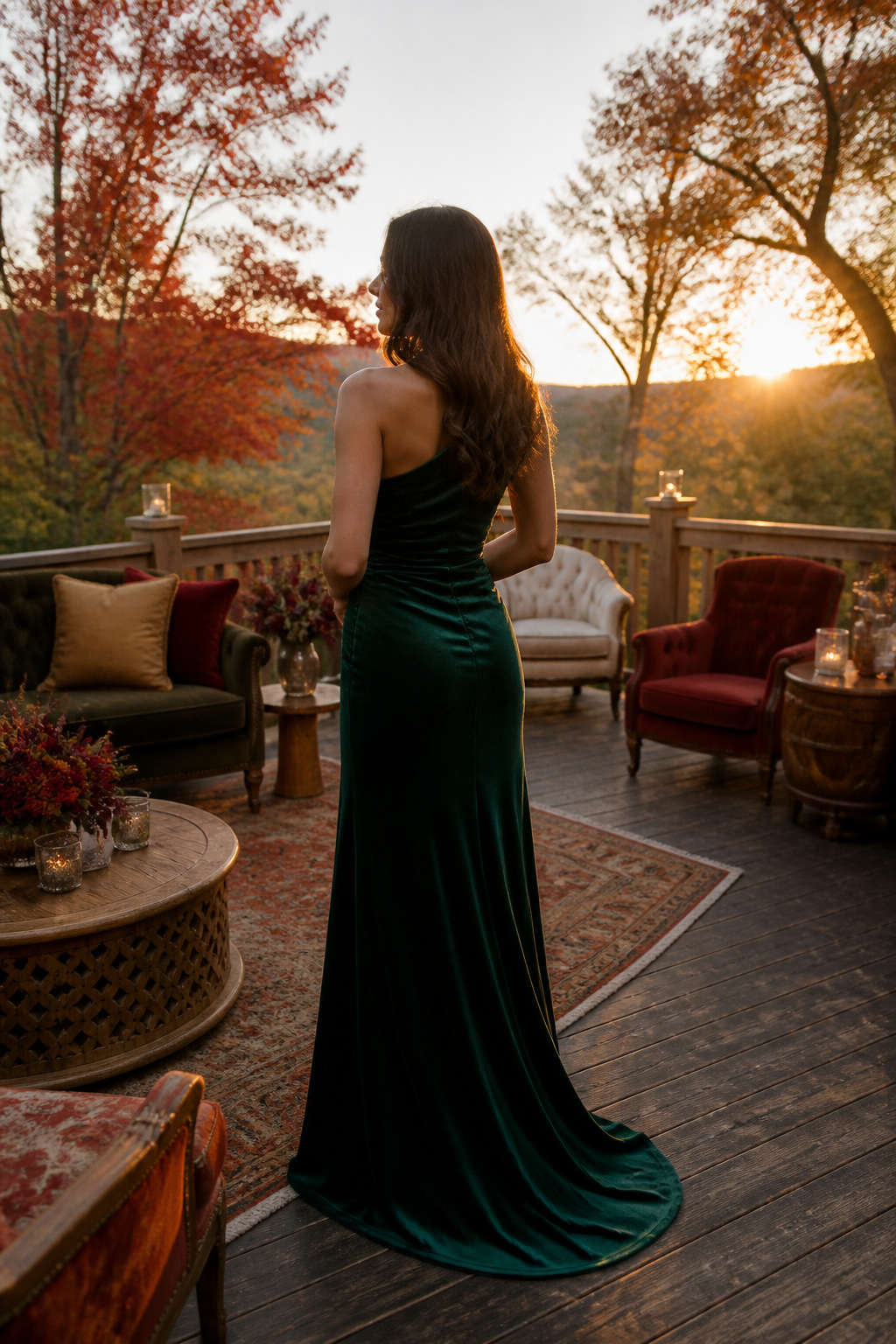
Velvet carries a weight and texture that lighter summer fabrics simply cannot match, and that is exactly why it belongs at an autumn wedding. The pile catches low afternoon light the way satin or chiffon never will, creating depth that shifts as you move through a candlelit reception. You notice it most around golden hour, when the fabric seems to hold warmth rather than reflect it back flatly.
The luxurious appearance comes from that same density. Where crepe drapes cleanly and lace adds dimension through pattern, velvet builds its presence from the surface itself. It photographs without glare, reads as formal without trying, and layers well when temperatures drop after the ceremony. A deep jewel tone in velvet will outlast every trend you spot across the season, because the fabric does the work instead of the cut.
One-Shoulder Dresses

A one-shoulder dress gives you that single bold line without relying on sequins or heavy beading to carry the look. The asymmetry does the work: it breaks up the vertical plane of your body in a way that reads modern against the rigid formality of a fall venue, where everyone else tends toward symmetrical necklines and matched sets.
You will want the shoulder line clean, not drooping. If the cut sits too low on the arm, the whole silhouette collapses into something accidental rather than intentional. Look for interior construction that holds the neckline in place, boning or a built-in shelf, so you are not tugging at fabric through the ceremony.
For fall specifically, this shape pairs well with weightier fabrics that would feel too severe in a strapless or fully bare style. A crepe or light wool blend on that single exposed shoulder gives you enough coverage to skip a wrap through most of the evening, which is one less thing to track at a seated dinner. The bare side is your statement; keep jewelry to a single earring or a cuff, never both.
Floral Fall Dresses

Florals for autumn work when the palette shifts, not when the print stays the same. A black, navy, or deep burgundy base with roses or peonies in dried gold, rust, or faded violet reads seasonal instead of misplaced. The dark ground is what separates a fall wedding guest outfit from a garden-party mistake. You will still see plenty of color, but it sits lower, denser, less eager to please.
Look for botanicals that feel like they were pressed in a book, not picked that morning. Watercolor blooms on charcoal, or chintz-scale patterns on chocolate brown, carry the romance without the spring association. Avoid anything on white or pale pink; even in September, that reads as leftover summer inventory.
The scale matters too. A larger, more scattered print suits evening better than tight repeats, which can turn busy under ballroom lights. Pair with metal accessories in bronze or aged gold rather than silver, which fights the warmth of the palette. If the dress runs sleeveless, a cropped velvet jacket in a tone pulled from the print itself keeps the look unified without turning costume.
Satin Midi Dresses

A satin midi dress lands where most fall weddings actually live: somewhere between the strict formality of a ballroom and the looseness of a converted barn. The midi length keeps you clear of mud at outdoor ceremonies without looking underdressed once you move inside. That mid-calf cut also handles weather that cannot decide between sixty degrees and forty-five; pair it with closed-toe heels and a light wrap, or boots and a heavier coat if the forecast shifts.
The fabric itself reads as eveningwear without demanding a floor-length silhouette. Satin catches the low autumn light in a way that matte fabrics do not, which matters when the sun sets before the cocktail hour ends. For a vineyard or estate wedding, this is often the right call: formal enough for stone terraces and candlelit rooms, not so grand that you feel out of place among exposed beams or hay bales. City lofts work the same way; the sheen holds up against industrial backdrops without fighting them.
You will see this combination, satin and midi, treated as a fallback. It is better thought of as a precision tool: one dress that adapts to the invitation you were not quite sure how to read.
Sophisticated Eveningwear

Some dresses sit between the categories: too refined for a cocktail party, not quite a gown, and exactly what a vineyard estate or evening ceremony calls for. These are the elegant midi dresses and sophisticated eveningwear pieces in refined fabrics that read formal without borrowing from trend-specific territory.
A satin midi dress handles this middle ground well at a vineyard or historic estate, where floor-length can feel overdressed but anything shorter looks underdone. The hem hits below the knee, the fabric carries the occasion, and long sleeves or a structured bodice keep it season-appropriate for fall. For a ballroom wedding, the same approach scales up: heavier silk, more substantial construction, maybe subtle embellishment rather than full beading.
The real mistake here is choosing a fabric that cannot hold its own weight. A lightweight crepe or jersey midi collapses into casual territory the moment the light changes. Satin, structured crepe-back satin, or a lined silk with body keeps the line sharp from the ceremony through the last dance. Velvet reads rustic and belongs in its own category; floral prints, however autumnal, pull toward garden-wedding territory.
Color does the seasonal work that fabric alone cannot. Deep burgundy, midnight navy, forest green, or a muted gold signal fall without needing a leaf motif or heavy texture. Pair with simple metallic heels and minimal jewelry; the dress is doing enough.
Elegant Accessories

Statement earrings do the heavy lifting when you would rather keep the dress simple. A clean silhouette in burgundy or navy stays quiet enough that a metallic drop or chandelier piece reads as intentional, not loud. The same rule holds for a clutch or belt in gold or silver: it should finish the outfit, not fight it.
If you are working with a limited budget, one strong accessory is a better move than several small ones. A single pair of earrings or one velvet handbag gives the look its seasonal weight without asking you to buy a full set. Metallic accessories pair especially well with the deeper colors that read as fall, emerald included, so the combination does the work for you.
For outdoor venues where you might switch to block heels, keep the earring proportion in check. Long drops can feel off with a sturdier shoe. A shorter metallic stud or a small hoop keeps the balance.
What Formal Attire Means for Fall
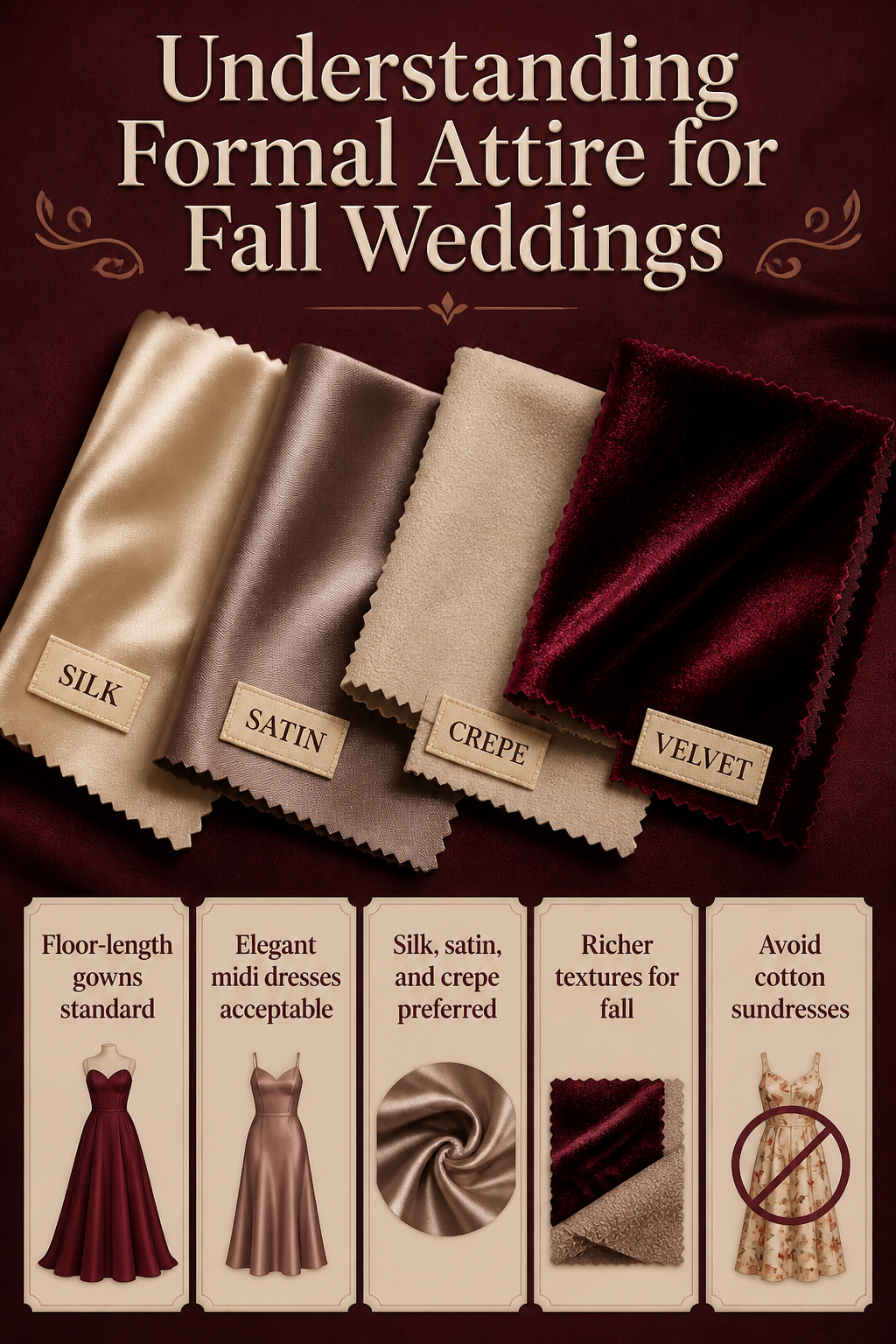
Formal wedding attire sits one rung below black tie, and that distinction matters when you are standing in front of your closet two weeks out. It means floor-length gowns and elegant midi dresses are the standard, not the ceiling. The real weight of the dress code lives in the fabric and cut: silk, satin, and crepe in refined silhouettes signal that you understood the assignment, while a cotton sundress in a fall print would read as a mistake even at an afternoon ceremony.
Fall gives you slightly more room than a June wedding would. Richer textures and deeper palettes fit the season without pushing into costume territory. A velvet detail or a burgundy tone works here in a way it would not in July.
The venue and timing still govern the call. An evening ballroom wedding wants that full-length gown; a vineyard or estate ceremony may accept a sophisticated midi in satin or a structured crepe. The goal is to look intentional, not to arrive guessing.
Fall Colors That Work

The colors that carry a fall wedding guest outfit through nearly any invitation are the deeper, muted tones that read as intentional rather than leftover from summer.
- Burgundy captures the season outright and still ranks as the most requested shade for formal autumn weddings.
- Emerald green has enough richness for evening receptions but does not look out of place at afternoon ceremonies; it is one of the few saturated colors that works across both.
- Navy blue is the safe default when the dress code is unclear. It pairs with every venue type and flatters nearly every skin tone without reading as severe.
- Plum adds the warmth that lighter purples lack in October or November light.
- Chocolate brown has replaced the old rule against brown at evening events. It now reads as a deliberate alternative to black, especially in outdoor or vineyard settings.
- Rust leans heavily into the season. Reserve it for daytime or outdoor weddings; under ballroom chandeliers it can look like a costume choice.
- Black is fully accepted for formal fall weddings and remains the strongest move for strictly evening receptions.
The mistake is pairing rust or chocolate brown with black accessories. The clash is subtle but definite. Navy, burgundy, or metallic hardware fixes it.
Fabrics for the Season
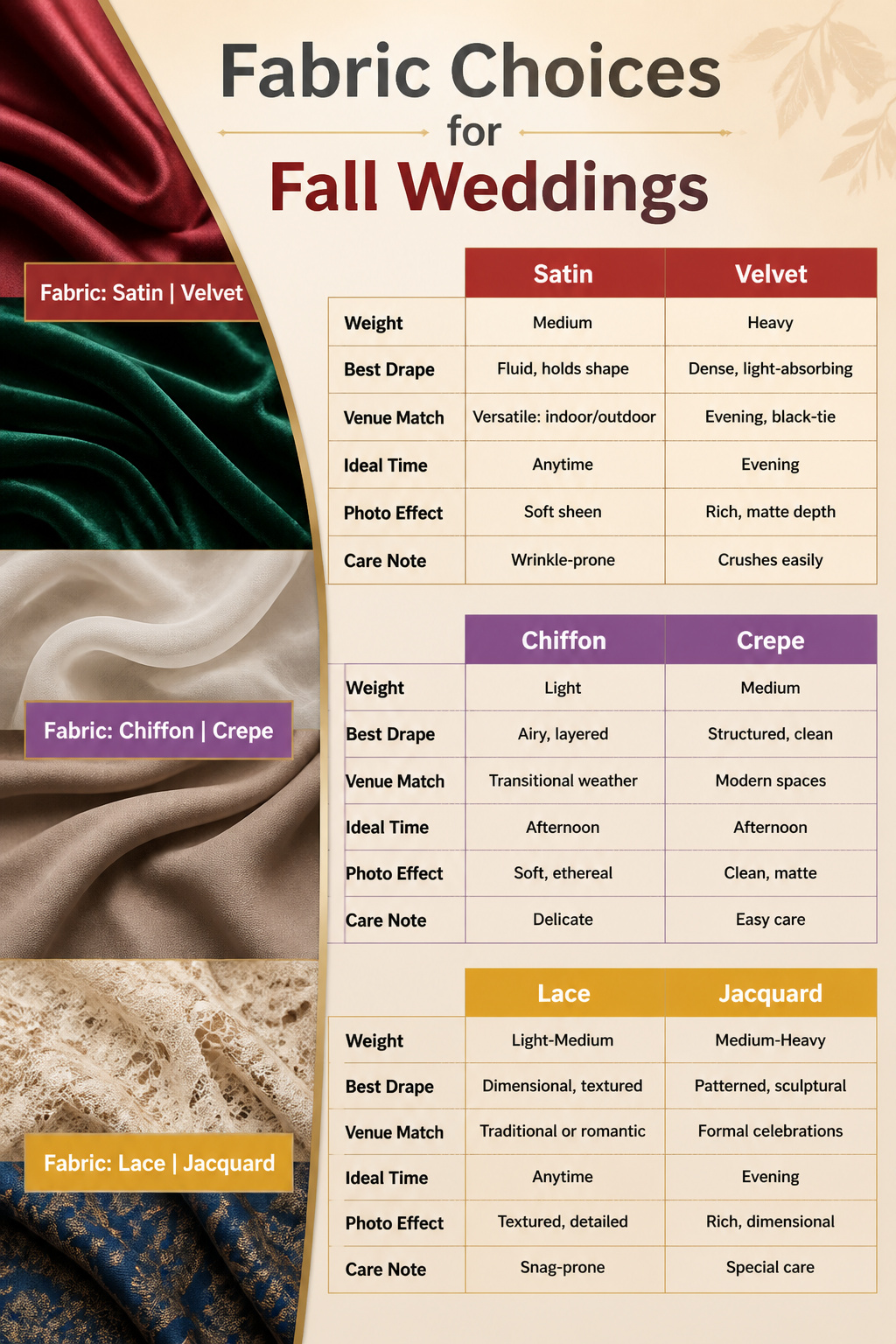
Satin carries a smooth finish and subtle shine that works across nearly any venue, from hotel ballrooms to converted barns. Velvet brings the weight and texture people expect in autumn, though it can read too heavy for an outdoor ceremony that runs long in afternoon sun. Chiffon layers well when temperatures drop after sunset, and crepe gives you structure without the bulk that overheats a crowded reception hall.
| Fabric | Weight | Best Drape | Venue Match |
|---|---|---|---|
| Satin | Medium | Fluid, holds shape | Versatile: indoor/outdoor |
| Velvet | Heavy | Dense, light-absorbing | Evening, black-tie |
| Chiffon | Light | Airy, layered | Transitional weather |
| Crepe | Medium | Structured, clean | Modern spaces |
| Lace | Light-Medium | Dimensional, textured | Traditional or romantic |
| Jacquard | Medium-Heavy | Patterned, sculptural | Formal celebrations |
Lace adds dimension that photographs well but can snag on rough wooden chairs or outdoor seating. Jacquard introduces visual interest through woven patterns, making it a strong choice when the invitation specifies formal dress and you want something that reads as deliberate rather than safe. Velvet and jacquard lean toward evening; chiffon and crepe handle afternoon start times without looking out of place. Your own temperature regulation matters here: a crepe long-sleeve dress solves the problem differently than a chiffon gown with a wrap you can remove.
Dressing for the Venue

Ballroom weddings demand the most formal interpretation of fall wedding guest outfit you own. Floor-length gowns, satin dresses, and elegant embellishments read correctly under crystal chandeliers and twenty-foot ceilings. Anything shorter or softer looks like you misread the room.
Vineyard and garden weddings shift the frame. You can wear a satin midi dress or a flowing gown in a rich seasonal color without appearing underdressed. The outdoor setting forgives relaxed structure and softer lines that a ballroom would swallow.
Estate and barn weddings sit in the middle. Historic manor houses call for long-sleeve dresses or sophisticated midi styles. A formal barn wedding takes velvet, autumn florals, and elegant long-sleeve silhouettes without requiring full evening formality.
The invitation and the setting together tell you which version of formal the couple intends. Evening timing in a city ballroom pushes you toward floor-length. An afternoon estate ceremony leaves room for a refined midi. When the venue is outdoors and the start time is before five, you can almost always step down one degree of formality and still arrive appropriately dressed.
Accessories for Cooler Weather

The right wrap or shawl does more than keep you warm; it finishes the outfit. Most guides mention these pieces without explaining how to choose one, so start with what they agree on: a structured evening jacket or soft shawl adds warmth without competing with the dress. Pair a simpler gown with statement earrings and let the jewelry carry the visual weight. Metallic accessories work with burgundy, emerald, and navy, the colors that dominate fall palettes. For texture, velvet handbags and satin shoes reinforce the season without adding bulk. Block heels make sense for grass or gravel venues where stilettos sink. The mistake is treating the cover-up as an afterthought and grabbing something that clashes in formality. Match the jacket’s structure to the dress: crisp lines for tailored sheaths, draped softness for flowing silhouettes.
Frequently Asked Questions
What colors are best for fall formal wedding guest dresses?
Burgundy, emerald green, navy blue, plum, chocolate brown, rust, and black are the strongest choices for a fall wedding guest outfit. Burgundy remains the most requested shade for formal autumn weddings, while navy works across every venue type when the dress code is unclear. Rust and chocolate brown should be paired with navy, burgundy, or metallic accessories rather than black, which creates a subtle clash.
Can I wear black to a formal fall wedding?
Black is fully accepted for formal fall weddings and remains the strongest choice for strictly evening receptions. It pairs cleanly with every venue type and reads as intentional rather than severe under autumn lighting. For outdoor or daytime ceremonies, you may want to consider burgundy or navy instead, but black will never place you outside the dress code.
What fabrics work best for fall wedding guest outfits?
Satin, velvet, chiffon, crepe, lace, and jacquard each serve different fall wedding needs. Satin is the most versatile across indoor and outdoor venues. Velvet and jacquard lean toward evening and black-tie events. Chiffon layers well for transitional weather, while crepe gives structure without overheating crowded reception halls. Lace adds dimension but can snag on rough wooden chairs or outdoor seating.