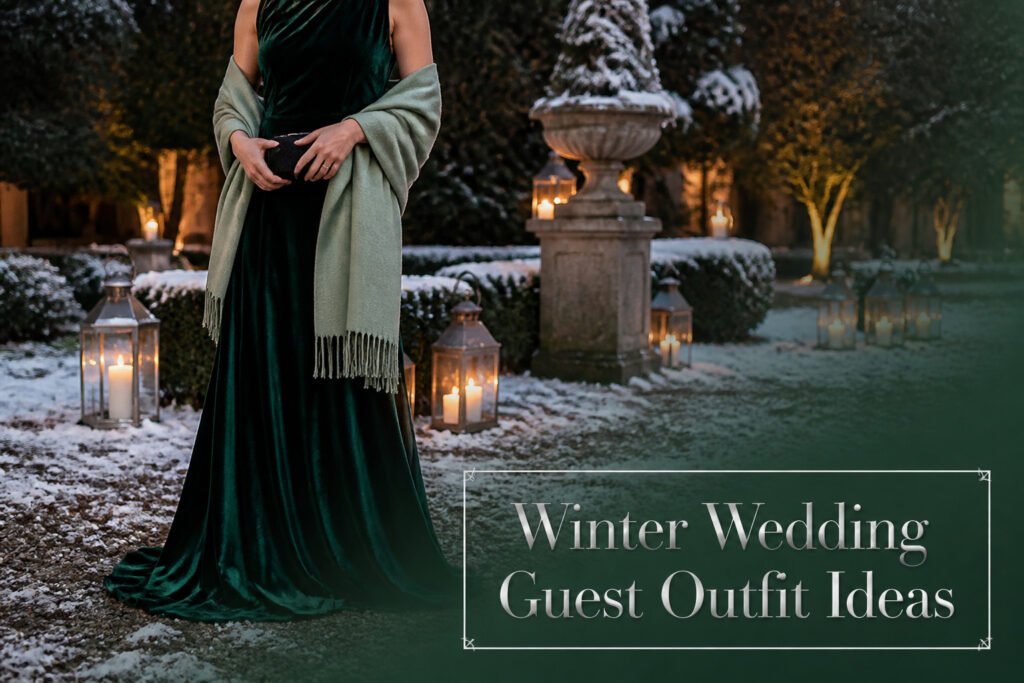
The right winter wedding guest outfit depends on the dress code, not the temperature. Black-tie still means floor-length gowns in January, and a puffer coat over one reads as wrong as sandals would. Reformation’s silk and velvet cuts run $300–$600 and bridge that gap between strict formality and the season’s heavier fabrics.
1. Black-Tie Gowns

A black-tie winter wedding is not the moment to test whether the dress code is flexible. The invitation says black tie, and that means floor-length gowns are required, not suggested. Men will be in tuxedos, and you will be expected to match that formality with something equally elevated. A simple, timeless silhouette in black, charcoal, or deep jewel tones will carry you through the evening without drawing attention for the wrong reasons. Think of a boat-neck dress with a slight train, or something more opulent if the venue calls for it.
Reformation is one place to look if you are building the outfit from scratch. Their gowns run $300–$600, and they cut them in sustainable fabrics that feel appropriate for a winter event. The Daniela silk gown or the Camille velvet dress both sit at the dressier end of what they offer, and either one works for a night that ends with white-glove service and dancing. Buy something you will want to wear again, because at that price you should get more than one evening out of it.
2. Black-Tie Optional Dresses

Black-tie optional gives you the length without the stiffness. You still wear a floor-length gown, but you can choose a livelier fabric or a cut that moves more freely than strict black-tie would allow. Think of it as permission: the dress is lavish, not merely nice, yet it does not have to arrive in heavy satin or a silhouette that forbids a breeze.
The real difference is latitude. A black-tie gown tends toward structure and ceremony; black-tie optional lets you wear a slit that opens the shape, a winter botanical print, or a removable cape that comes off once you are indoors. Long sleeves still make sense for an outdoor cocktail hour, but the fabric can be lighter, the line more fluid.
Reformation builds dresses in this middle space well, with silk gowns and velvet cuts that read formal without the price of full couture construction. Most run $300–$600, and the cuts are designed to survive more than one winter event. The Tripoli in leopard print, the Camille in velvet, or the Daniela in silk each hits the dress code without looking like you borrowed from a stricter party.
Pick a dress that works with a wrap or scarf you can actually remove, not one that needs the accessory to make sense. That is the freedom black-tie optional offers: the gown stands alone, but it does not have to stand at attention.
3. Cocktail Dresses

A cocktail dress lands you in the right territory for an intimate winter wedding with a cocktail or casual dress code. Think of the smaller affair: a candlelit dinner in the Berkshires or a historic estate upstate where a full-length gown would feel like overreach. Here, a just-below-the-knee length strikes the balance between dressed-up and pared down.
Play into the season with color. An oxblood midi reads festive against winter whites and evergreens without drifting into holiday-costume territory. Pattern works too if the cut stays simple, though a solid in a deep burgundy or forest green often carries the evening better than something busier.
These dresses pull double duty. The same piece that works for the wedding itself transitions cleanly to a rehearsal dinner, where the mood is relaxed and the dress code softer. Brands like Quince, Tuckernuck, and Amanda Uprichard build specifically for this space, meaning you are not forcing a summer silhouette into December and calling it close enough.
4. Velvet, Silk, and Satin

Velvet, silk, and satin read as winter-appropriate because they catch light differently than summer cottons or linens. Under the warm, low bulbs of a hotel ballroom or a converted barn, a velvet dress absorbs light while silk throws it back, giving you depth in photos without the washed-out flatness of cheaper weaves. Satin sits between the two, holding a soft glow that flatters skin tones under string lights and candlelight.
These fabrics also signal the formality of the season. A velvet blazer or satin midi reads intentional where a floral chiffon might look like you grabbed the wrong closet. For black-tie events, velvet and silk are what you will see at the coat check; for relaxed affairs, a tailored satin jumpsuit still feels dressed-up without trying too hard.
Winter weddings are the ideal excuse to lean into those richer colors, more elegant fabrics, and longer hemlines. Velvet, silks, satins, and jewel tones are pieces you will see at formal events.
What this means for you: choose the fabric to match the light you will stand in. Velvet for dim, golden rooms where you want to look like you belong in the frame; silk or satin for brighter spaces where you need the dress to do some of the work.
5. Coats, Wraps, and Shawls

The coat you wear over your winter wedding guest outfit matters as much as the dress underneath. A puffer or trench reads casual at a black-tie affair, so skip those. Instead, a longline tailored coat in the same color as your dress gives you a clean monochromatic line from the door to the coat check.
Wraps and shawls work better for semi-formal or relaxed weddings where you want warmth without bulk. A shawl over a midi or maxi dress adds coverage and keeps the silhouette fluid. Capes fall somewhere between; they have drama but can swallow your shape if the dress underneath is already full.
Two ways to play this: match the coat exactly to the dress for formality, or choose a wrap in a deeper jewel tone for contrast. The coat wins at black-tie events. The wrap wins when you need to move between indoor heat and outdoor cold without checking anything.
6. Warm-Destination Weddings

You leave snow boots at home and still pack wrong because the invitation hinted at something you missed. Read the dress code line first. Black-tie on a Caribbean dock means a floor-length silk gown in heat that wilts polyester. Beach formal invites looser linen cuts or a strapless maxi in a floral bold enough to match the actual landscape you land in. The mistake is assuming warmth equals casual; St. Barths in January can be as dressed as Vail, just breathes differently.
If the invitation says nothing specific, look at venue and time. Waterfront receptions after sunset lean toward lustrous silk or lightweight evening fabrics, not sundresses. Pack one breathable formal piece and one cocktail option in botanical print. Quince and Boabab both cut resort lines that handle the flight-to-ceremony transition without looking like you came from the pool. Leave anything that needs heavy underpinning; you will not wear it.
Reading the Dress Code

A winter wedding guest outfit lives or dies by how well it matches the dress code printed on the invitation. Black-tie means floor-length, full stop. Hemlines that skim the ankle read as underdressed in a room full of gowns, and the mistake is common enough that you will spot someone in the wrong length at nearly every formal winter wedding. Cocktail dress codes give you room to move: knee-length or midi cuts work, and you can afford a little more personality in the fabric or the neckline. Casual weddings are rarer in winter, but when they appear, they mean exactly what they say. A neat wrap dress or tailored separates with closed-toe shoes fit the tone; anything that would work at a summer garden party will look out of place against bare trees and early sunset. When the dress code is missing, assume the season pushes it one notch higher than you would in July.
Color and Fabric Choices

Winter weddings give you permission to put the blush and mint back in the drawer. Jewel tones read correctly against bare branches and early sunsets in a way pastels never quite manage; an emerald or sapphire dress holds its own under venue lighting that would wash out softer shades. The season itself does the signaling, so you do not need to explain the choice.
Fabric weight does the same work. Velvet, silk, and satin carry the visual heft that chiffon and linen surrender to summer breezes. A tailored midi in a heavier weave looks intentional at a relaxed afternoon reception, not underdressed. For formal affairs, the same principle scales up: longer hemlines in richer materials match the gravity of the event without needing additional ornament.
The coat you pull on over the top matters just as much. A puffer or trench undercuts a formal dress; a longline tailored coat in the same color family keeps the line continuous. The monochromatic moment works because the eye reads the silhouette as one piece rather than an outfit with an afterthought thrown over it.
Where to Shop
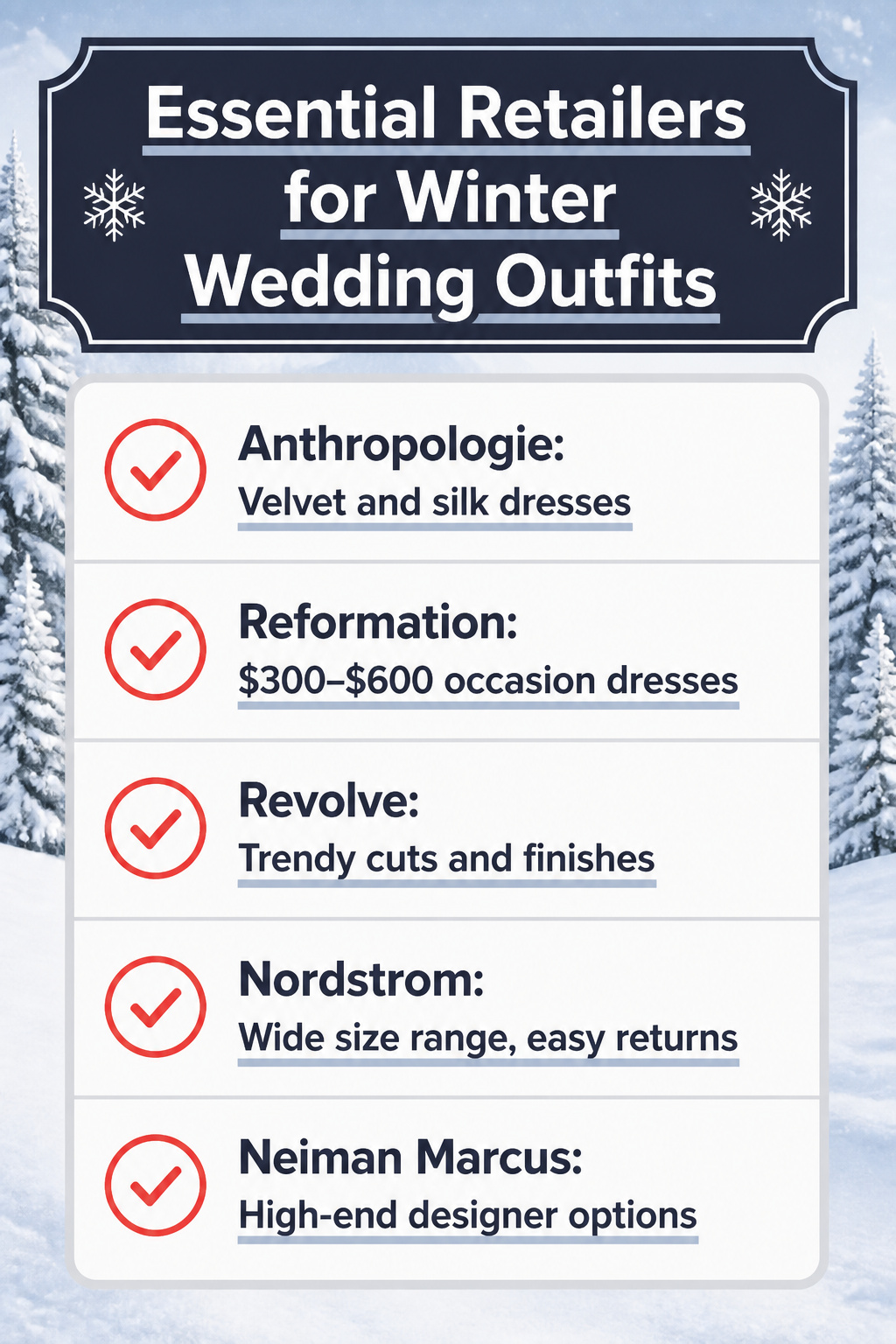
You do not need to hunt across dozens of sites to find a winter wedding guest outfit that actually works for cold weather. A handful of retailers stock the right weight of fabric and the right cut for the season.
- Anthropologie carries dresses with the heavier drape and longer sleeve you want for a winter ceremony. Look for velvet and lined silk rather than the unlined chiffons that dominate summer stock.
- Reformation runs $300–$600 for occasion dresses and uses more sustainable fabric than most brands at that price. The range covers everything from elevated casual to black tie, and the pieces are cut to wear again rather than sit in your closet after one event.
- Revolve stocks the faster-moving trends: metallic finishes, cutouts, and shorter hemlines. Filter by sleeve length and fabric weight, because the site moves a lot of summer-weight stock year-round.
- Nordstrom gives you the widest size range and the easiest returns. Use the filters to narrow to winter-appropriate fabrics, or you will scroll through pages of chiffon that will leave you cold in a church with bad heating.
- Neiman Marcus is where you go for designer labels like Retrofete and Alice + Olivia. The range in price and style is huge, so start with the occasion-dress filter rather than browsing the full catalog.
Frequently Asked Questions
What should guests wear to a winter wedding?
Lean into richer colors, elegant fabrics, and longer hemlines. Velvet, silk, satin, and jewel tones carry the visual weight that matches the season, while the specific dress code on the invitation determines whether you need a floor-length gown or a midi cut. For formal events, black tie means floor-length without exception; for relaxed affairs, a tailored midi or jumpsuit in a heavier weave looks intentional rather than underdressed.
What to wear over a dress for a wedding in the winter?
A longline tailored coat in the same color as your dress gives the cleanest formal line from door to coat check. Wraps and shawls work better for semi-formal or relaxed weddings where you want warmth without bulk, and they let you move between indoor heat and outdoor cold without checking anything. Skip puffers and trenches at black-tie events; they read casual against a gown.
What should someone over 50 wear to a winter wedding?
The dress should make you feel confident, comfortable, and polished, with no hard age rules beyond that. Midi and maxi dresses with shawls for extra warmth tend to suit this aim well, since they offer coverage and a fluid silhouette that works across formality levels. The same seasonal logic applies: jewel tones and heavier fabrics like velvet or lined silk read correctly against winter backdrops.