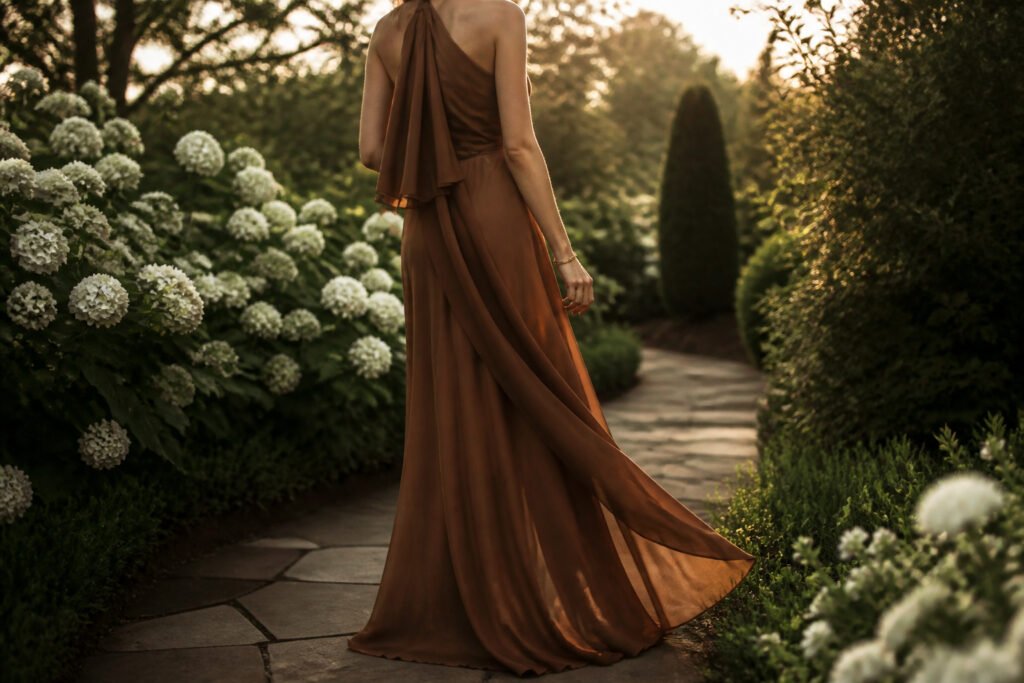
Wedding guest dresses are the specific garments you wear to attend someone else’s ceremony and reception, not the white gown at the center of the altar. The right choice depends on reading what the invitation actually tells you: the stated code, the venue, and the hour all modify each other, and guessing wrong puts you in sequins at a vineyard or a ballgown at a rooftop bar. The Dress Maelie Trüffel, cut in a warm brown between milk chocolate and burnt caramel, was built for exactly that November formal where the thermometer reads forty-five degrees and standard black would feel funereal.
Dress Maelie Trüffel

The Maelie in trüffel reads as a quiet choice until you see it move. The color sits between milk chocolate and burnt caramel, warm enough to keep a November wedding from feeling funereal but too grounded for a summer garden party. That is the point. You wear this when the invitation says formal and the thermometer says forty-five degrees.
The cut runs clean through the bodice with a slight flare from the waist, nothing theatrical. Pair it with a heavier crepe or a lined satin, something that holds the line instead of clinging, and you have the weight that makes trüffel feel intentional rather than apologetic. A lighter fabric in this shade can look like you grabbed the wrong season from your closet.
You will want to test it against your own coloring under indoor light, not just the store mirror. Trüffel can pull yellow on some skin tones, and a wedding reception is not the place to discover that. If it works, it works better than safe black: you look dressed, not dressed-up.
Dress Gabriela Wein

Wine tones carry evening receptions with a depth that reads formal without drifting into black-tie territory. The Gabriela Wein sits in that space: deep burgundy, not quite maroon, with enough red in the base to keep it alive under candlelight.
You get the most out of this shade in fall and winter, when the color echoes the season rather than fighting it. Pair it with heavier fabrics; a crepe or structured satin holds the richness where a chiffon would wash it out. In spring, the same dress needs lighter construction to avoid looking like you grabbed the wrong seasonal section, though the color itself still works for indoor evening events where the lighting runs warm.
The mistake is wearing wine to an outdoor summer wedding. The tone absorbs sunlight instead of reflecting it, and the visual weight feels off against bright green lawns. Save it for spaces where the lights dim after dinner.
Dress Chesney Trüffel Stretch

Stretch fabrics behave differently from standard weaves when you are sitting through a long ceremony, standing for cocktails, and dancing until midnight. The Dress Chesney Trüffel Stretch uses a trüffel brown knit construction that gives with your body rather than fighting it, which matters more than most people realize until they have spent four hours in a dress that does not.
Standard woven fabrics hold their shape through structure and seamwork. They look crisp in the first hour and can feel like armor by the fourth. Stretch construction distributes tension across the whole garment, so the waistband does not dig, the shoulders do not pinch, and the skirt does not ride. You notice the difference most in the lower back and across the upper arms, where woven dresses often bind when you reach for a drink or lean across a table.
Trüffel brown sits in the useful middle ground between chocolate and taupe. It photographs warmer than black in evening light and hides the minor creases that any fabric picks up during a long event. The color pairs cleanly with gold jewelry and with the silver tones that many guests default to.
This construction wins over standard weave for outdoor summer weddings, for religious ceremonies with extended standing, and for any reception where you know the dancing will run late. It gives up a small amount of that sharp, pressed structure. You gain movement instead, and by hour five you will have forgotten you are wearing it.
Dress Vesper Kaffeebraun
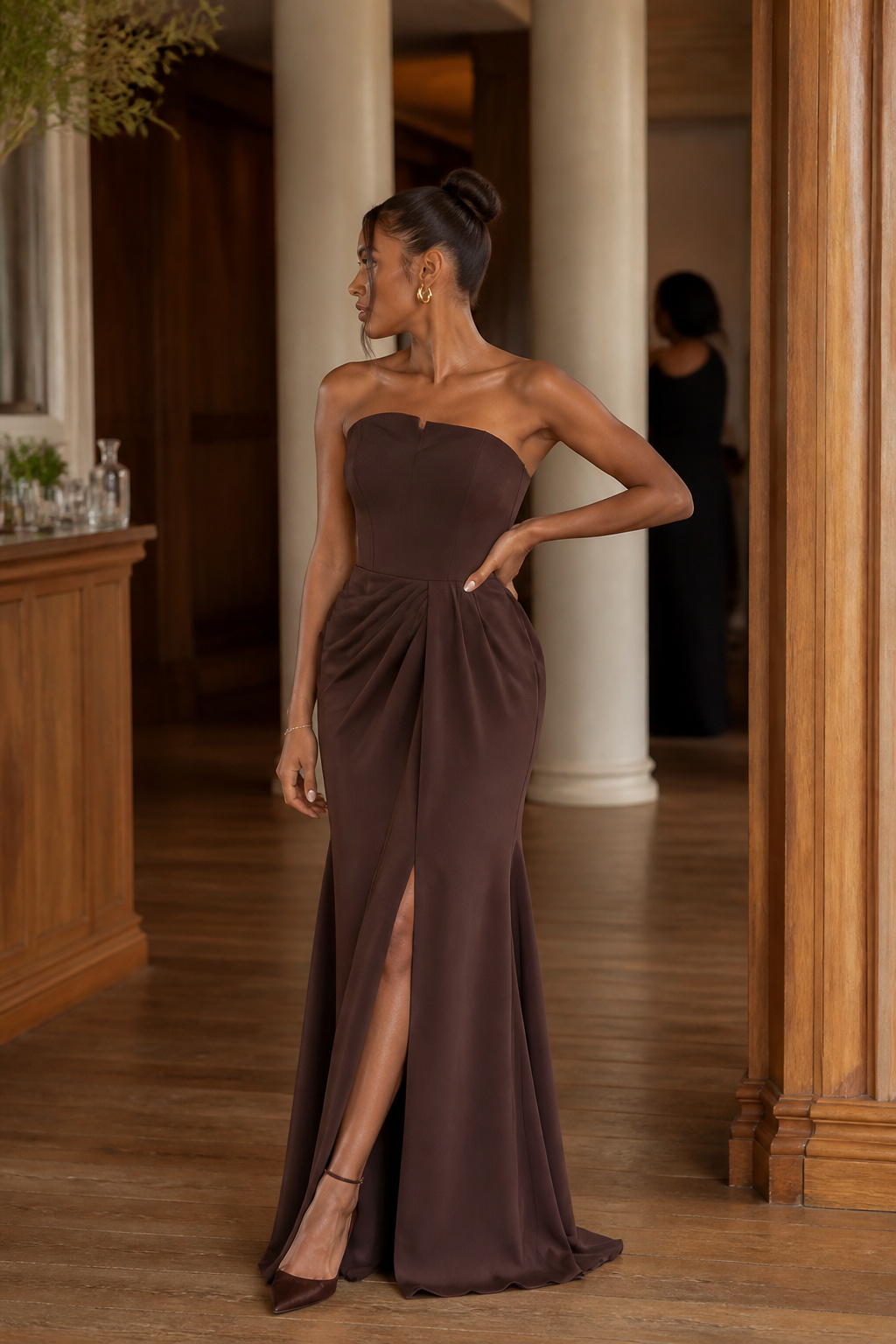
Coffee-brown lands differently than the warmer terracottas and ochres that usually fill autumn wedding frames. Vesper Kaffeebraun carries a cooler, almost charcoal undertone that keeps it from bleeding into church pews or wooden arbors in photographs. Where camel or rust can flatten into background timber, this shade holds its own edge.
That same coolness governs your metal choice. Yellow gold fights it; the pairing turns muddy under reception tent lighting. Silver, white gold, or gunmetal sit cleaner against the brown, and a brushed finish reads better than high polish, which can look accidental against the dress’s matte weight. Rose gold splits the difference and sometimes works, though it needs testing in the actual light you’ll stand in, not the store mirror. If you own one versatile set, make it silver-toned.
Dress Guinevere Olivgrün Stretch
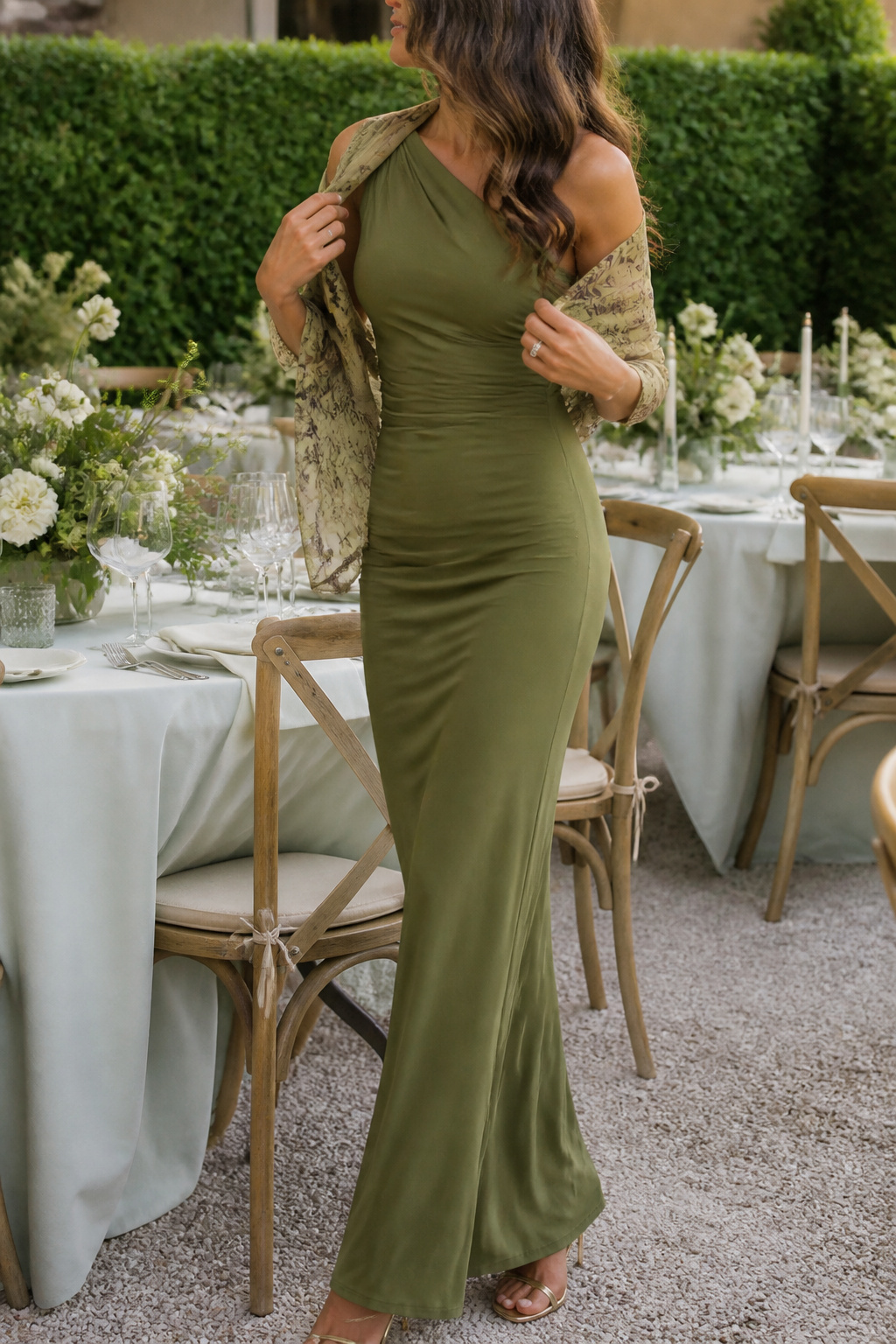
You will hear at every wedding that green brings bad luck to the bride, but that superstition attaches to bright, saturated shades, not to something like the olive tone here. Olivgrün reads as neutral in daylight and turns richer under evening tent lighting, so you can wear it from a May garden ceremony straight through to a November hotel reception without looking out of season.
The stretch weave matters more than you might expect. You sit through a long service, stand for cocktails, then sit again for speeches; the recovery on this fabric means the skirt does not bag at the seat by the time dancing starts. Fit tends to run close through the ribcage, so size up if you plan to wear a shaping layer underneath or you will spend the reception adjusting rather than talking.
Pack a lint roller. The shade catches every dust mote in shuttle-bus upholstery and every feather from the venue’s decorative pillows. That is the trade for a color this forgiving on skin with any warmth to it.
Dress Isabelle Dunkles Moos

The Dress Isabelle Dunkles Moos sits a full shade deeper than the olive green above, pulling the yellow out until what remains reads as formal rather than casual. Where the lighter olive can feel like a garden party, this moss belongs in a stone church or a candlelit hall.
That depth changes who it flatters. Olive with too much yellow can turn sallow on cooler complexions; this darker, bluer base does the opposite. It picks up the pink in fair skin without washing it out, and on medium or deeper tones it creates the kind of contrast that makes features read clearly rather than sinking into the fabric. Brunettes and black hair carry it easily; red hair gains a muted backdrop that keeps the color from competing.
If you are choosing between the two for a black-tie optional wedding, this is the one that arrives appropriately dressed.
Dress Sorrel Marine
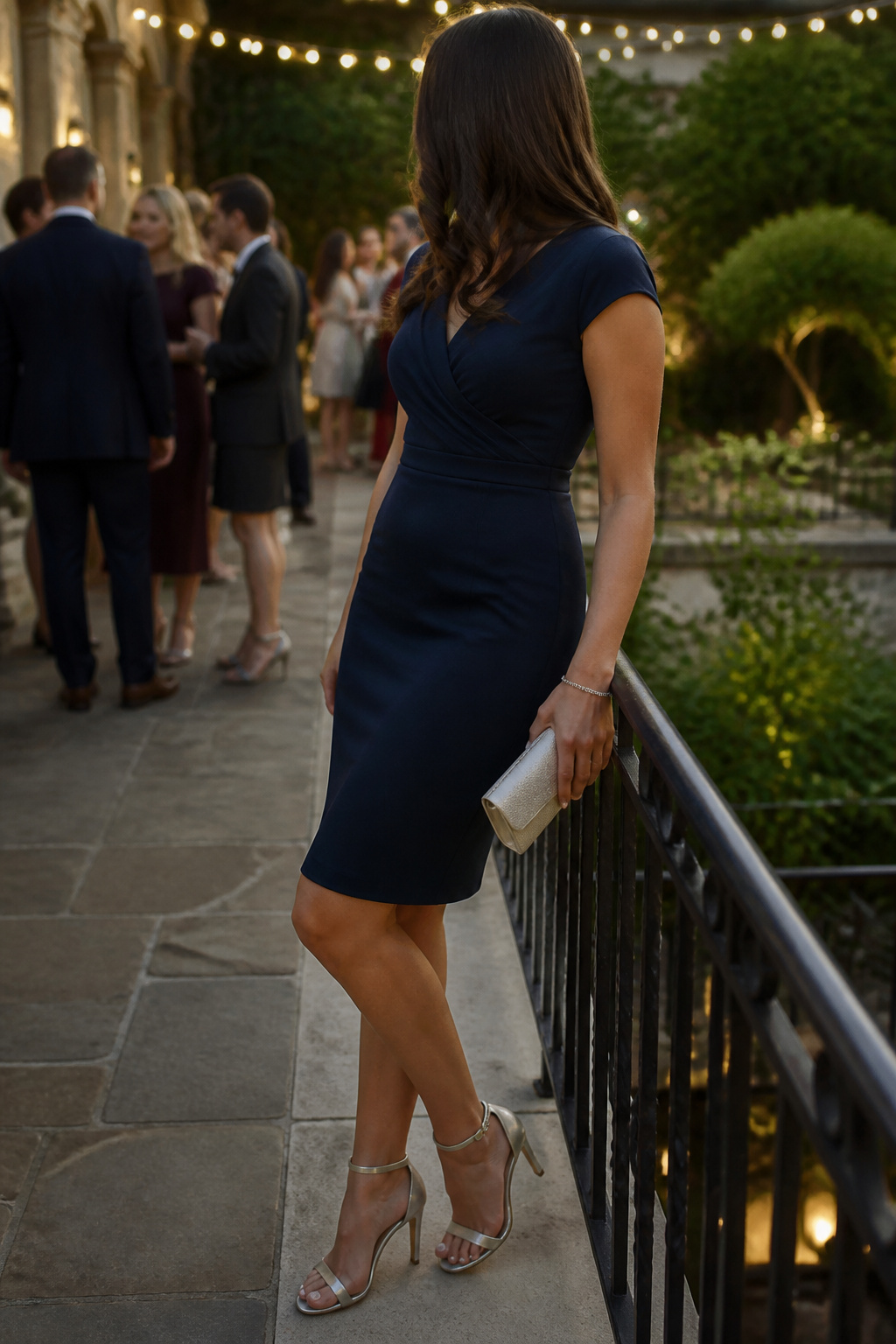
Navy blue works for almost every invitation you will receive. It reads as formal without demanding attention, and the camera loves it: the color bounces just enough light to keep you visible in group shots without washing out next to the bride. You can wear it to a black-tie optional evening and to a garden party with the right shoes, and no one will ask why you are dressed for a funeral or a nightclub.
The Sorrel Marine cuts close through the bodice with a hem that hits right at the knee, which is the length that keeps you seated comfortably through speeches and dancing both. The fabric has a slight texture that photographs better than flat satin under reception lighting, where shine can look cheap.
You will wear it again. Navy does not signal "wedding" the way blush or mint does; pair it with a structured blazer for an office dinner, or belt it and add boots for a date. That re-wearability matters when you are buying for a season with three or four invites.
Dress Tina Trüffel

Tina Trüffel shares the same warm brown base as its sisters but cuts a different line entirely. Where Maelie drapes soft and full through the skirt, Tina nips in at the waist and drops straight to the knee in a narrow column. That shift from volume to structure changes who wears it best. The fuller hip that floats inside Maelie’s A-line will read as emphasis here; conversely, a straighter frame with little waist definition finally gets the curve the fabric builds in for you.
The bodice carries the same detail work, so the vertical interest stays intact. What you lose in forgiveness below the waist, you gain in length through the leg. A petite wearer who swam in Maelie’s sweep finds the hem hits right with Tina’s trimmer line. The sleeve sits slightly higher too, which keeps the shoulder clean rather than extended.
Color matching across the three Trüffel dresses means the same shoes, the same bag, the same metal tones transfer over. The difference is silhouette alone, and that difference is sharp enough that trying the wrong shape first can send you back to the rack convinced the color itself is wrong. It usually is not.
Dress Isonelle Orange Rot
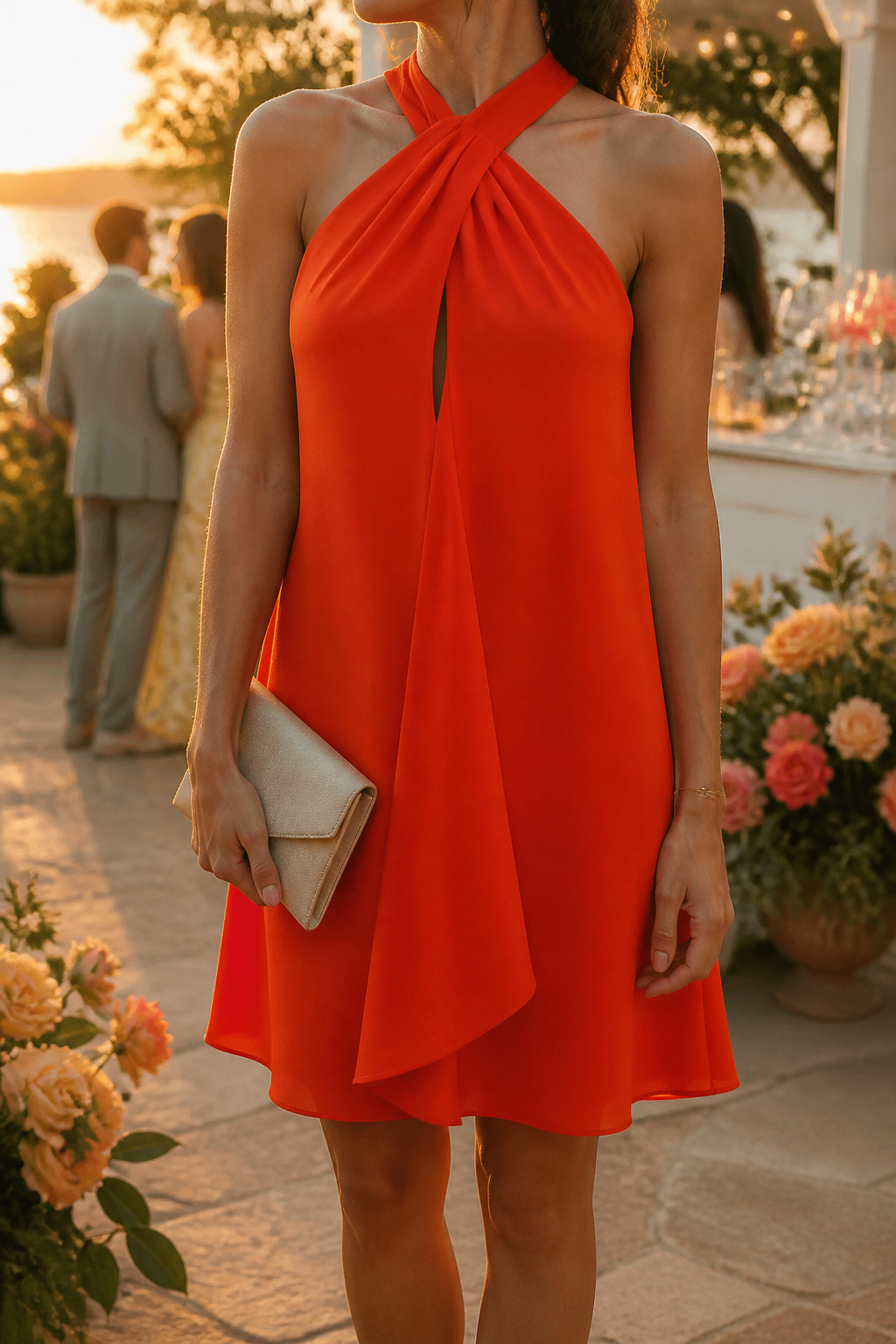
Warm brights make guests nervous because the line between festive and competitive is thin. Orange-red works when the wedding itself leans into heat: a sunset ceremony, a summer vineyard, a celebration where the couple chose coral or terracotta in their own palette. In those settings, a color this loud reads as participation, not interruption.
The hesitation is usually about tone, not hue. What pushes orange-red into the wrong territory is structure. A floor-length gown in this shade, worn to a noon church wedding, signals something different than the same color in a knee-length dress at an outdoor evening reception. The second reads like you understood the assignment.
Pair it with restraint elsewhere. Gold jewelry warms it further into costume; brushed silver or bare metal cools it down. A shoe in nude or a quiet brown keeps the eye moving rather than stopping at the dress. If the invitation mentions black tie optional, this is probably not the night for this shade. If it says festive attire or names a warm palette, you have permission you should use.
The real risk is not the bride. It is the photograph afterward, where you look like you are trying to outrun the décor. Keep the cut simple, the accessories few, and let the color do only the work it was invited to do.
Dress Jessenia Schwarz Stretch

Black at a wedding used to feel like a mistake. You would stand in front of the mirror wondering if you looked ready for a funeral instead of a celebration. That shifted somewhere in the last decade, and now a black dress at an evening or formal wedding reads as polished rather than mournful, provided the fabric and cut signal intent rather than convenience.
The Jessenia Schwarz Stretch earns its place in this category through construction rather than ornament. The stretch weave does what a rigid black faille cannot: it follows your shoulder line without gaping, settles over the ribs without strain, and recovers its shape after hours of sitting through speeches. You will notice the difference most when you reach across a table for the bread basket or bend to adjust a heel. A dress that requires readjustment after every movement is a dress you stop enjoying by the salad course.
The risk with stretch is over-reliance. A fabric that forgives everything can tempt a fit that is slightly too close, and black amplifies that error rather than hiding it. Size for the seated fit, not the standing one: the stretch will accommodate your shoulders, but it cannot create structure where the pattern lacks it. At a formal wedding, pair it with jewelry that carries light, a metallic or a stone with some fire, so the overall effect reads celebration rather than corporate retreat.
Dress Dillon Hellgrün Stretch
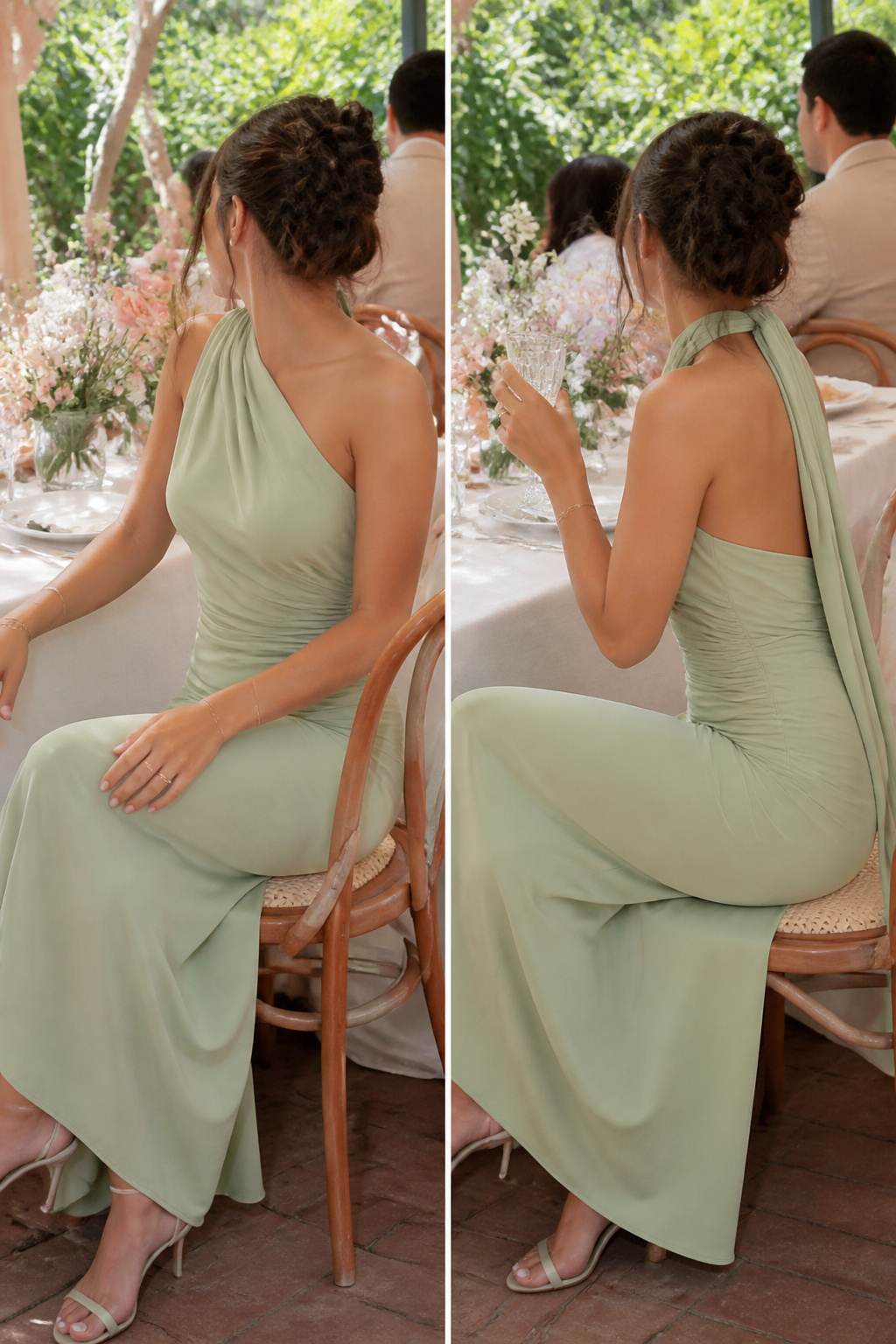
Light green stretch crepe lands in a spot most wedding guest dresses miss: bright enough for a noon ceremony, relaxed enough that you are not the one adjusting seams through cocktail hour. The Hellgrün shade reads as intentional color rather than a safe neutral you grabbed last minute.
Deeper greens carry weight. They suit dim ballrooms and winter tables, but step outside into grass or gravel and they turn theatrical, even funereal in harsh sun. This paler tone keeps the outdoor light working for you, not against you.
The stretch weave matters more than the color alone. You will sit through a long Catholic service, stand for photos, dance. A fitted cut in rigid fabric becomes a cage; the same cut with two-way stretch recovers its shape between poses. You do not have to size up for comfort and then spend the evening hiking the waist back into place.
For a garden wedding with a 2 p.m. start and a tent reception running past sunset, this is the safer bet against the darker options. It will not carry you through a black-tie evening, but that is not the brief.
Dress Anais Marine Stretch
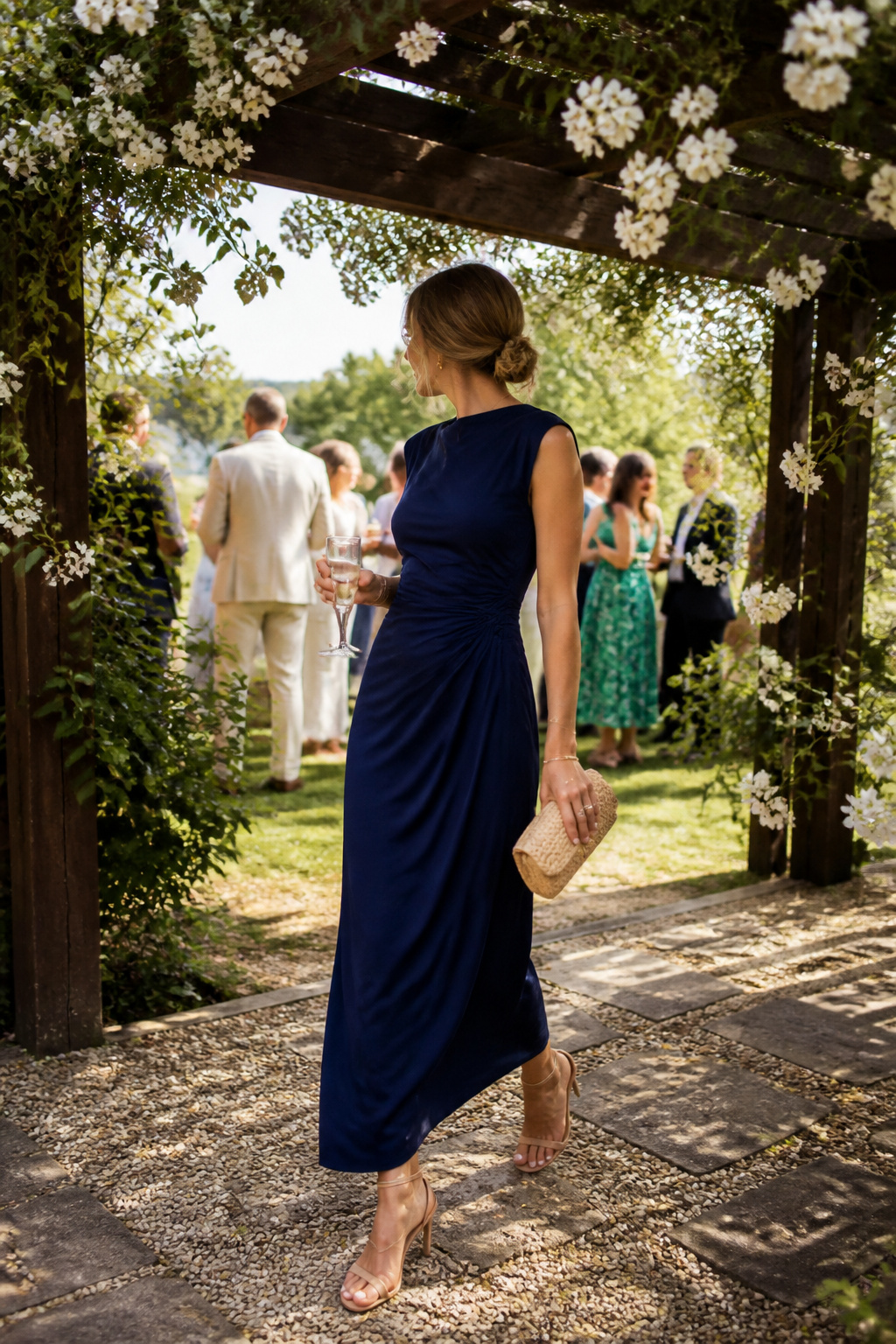
The Anais Marine Stretch takes the same navy as the Sorrel and replaces its structure with a knit-backed stretch weave. You gain about two inches of give through the waist and hips, which is exactly what you need when you are seated through a Catholic Mass or a Hindu ceremony that runs past the hour mark. Structured crepe looks sharper in the receiving line, but by the third time you stand for a hymn, the waistband is digging in and the skirt has ridden up. Stretch lets the dress settle back into place when you stand instead of staying bunched.
The tradeoff is in the shoulder and neckline. The Sorrel holds a set-in sleeve line that frames the face; the Anais drapes softer there, so you will want to add definition with a pendant or a cropped jacket. For a 2 PM garden wedding with folding chairs on grass, the stretch wins. For a 6 PM hotel ballroom with assigned seating and a plated dinner, the Sorrel still has the edge. Pack the Anais when you know the schedule and do not trust the schedule.
Dress Ixchel Wein
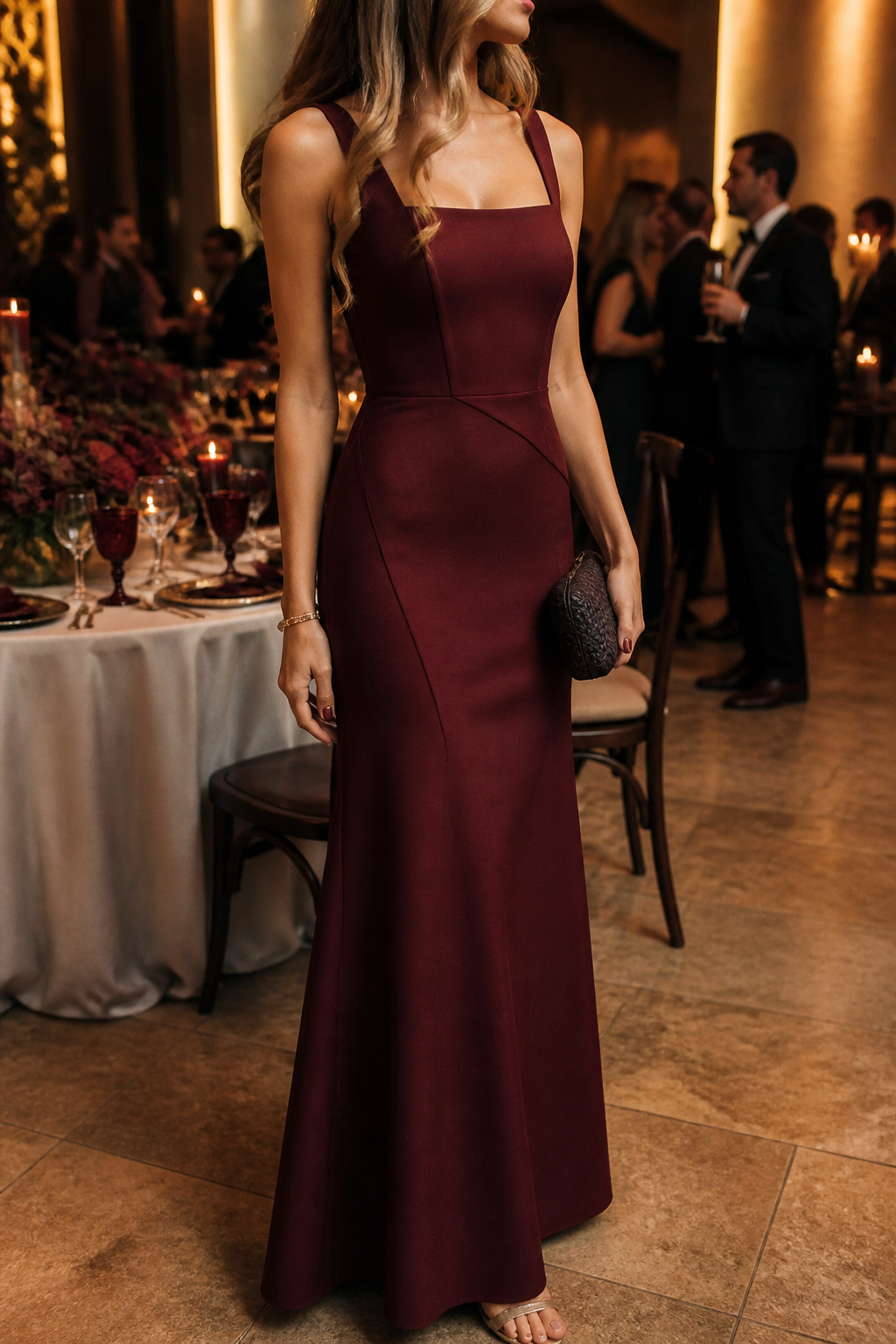
Ixchel Wein keeps the same wine tone as Gabriela but shifts the architecture. Where Gabriela runs softer and more fluid, Ixchel builds the waist with sharper seaming and a slightly more defined skirt. That structure rewards anyone who wants shape without padding or boning. You will feel held at the midsection rather than draped through it.
The tradeoff shows in the shoulders and upper back. Ixchel’s cleaner line through the torso asks more of your posture; slouch, and the dress announces it. Gabriela forgives that more readily. Choose Ixchel for an evening wedding where you will stand and mingle more than sit, or where the crowd tends toward sharper tailoring in the men. Choose Gabriela for a long seated dinner or a garden party where you want the fabric to move with you rather than hold its own line.
Dress Evangeline Himmelblau

Sky-blue chiffon reads cheerful at an outdoor spring wedding and borderline costume anywhere else. Evangeline Himmelblau is the most seasonally pinned-down dress in the set, and that limit is worth respecting. You wear it from late April through early September, ideally before four o’clock, ideally with grass under the ceremony chairs. The color turns chalky under artificial light and goes flat against autumn backdrops; you will look like you grabbed the wrong garment bag.
For summer heat, the lightness works in your favor. The fabric does not hold body warmth, and the pale tone reflects rather than absorbs sun. But that same delicacy means you need structure elsewhere: a defined waist, a real heel, jewelry with weight. Without those anchors, the dress floats into bridesmaid territory.
The mistake is treating it as versatile. Pack it for a garden wedding in Charleston, skip it for a November hotel ballroom. If your calendar holds only one outdoor warm-weather event this year, this is your value. If you need a single dress to cover multiple seasons, the Himmelblau is not it.
Reading the Invitation for Dress Code

Black-tie optional means a floor-length gown is welcome but a polished cocktail dress will not look underdone. Cocktail attire means exactly that: a knee-length or midi dress in fabric that reads evening, not office. The invitation’s stated code is only half the story. A garden wedding at four o’clock, even with black-tie optional on the card, moves the practical dress length down and the fabric weight lighter than the same wording for an eight o’clock hotel ballroom. The common mistake is reaching for your most formal piece to compensate for uncertainty. You end up in sequins at a vineyard or a ballgown at a rooftop bar, and you will feel it the moment you arrive. Read the venue and the time as modifiers to the words on the page. When the code is unclear, match the formality of the ceremony location rather than exceeding it.
Fabric Weight by Season
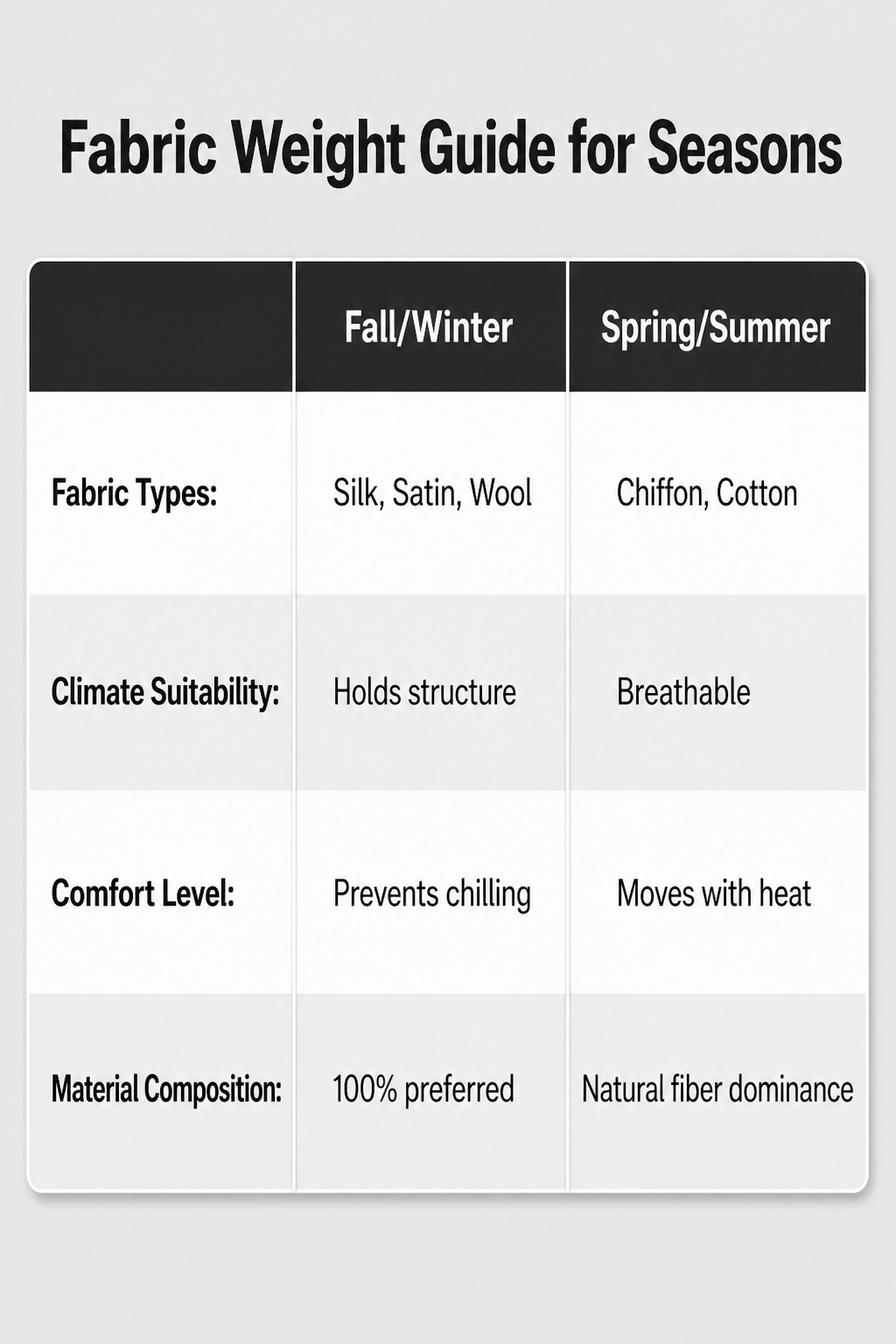
A fall or winter wedding calls for silk, satin, or wool, fabrics that hold their structure against a cold venue and read as deliberate rather than accidental. You will feel the difference the moment you step from the car: these materials do not cling or chill the way summer weaves do in December. For spring and summer, shift to chiffon, cotton, and lighter weaves that move with heat rather than trapping it against your skin.
Shopping online makes this harder because you cannot handle the cloth first. Check the fabric content label before you buy. Look for 100 percent silk or wool, or blends where those fibers dominate the composition. A dress listed as "silk" with only 15 percent silk and 85 percent polyester will drape and breathe like the polyester, not the silk. For warm-weather chiffon, the same rule holds: the natural fiber percentage should lead, or you will sweat through the ceremony in a fabric that looks right and wears wrong.
Color Rules That Still Matter
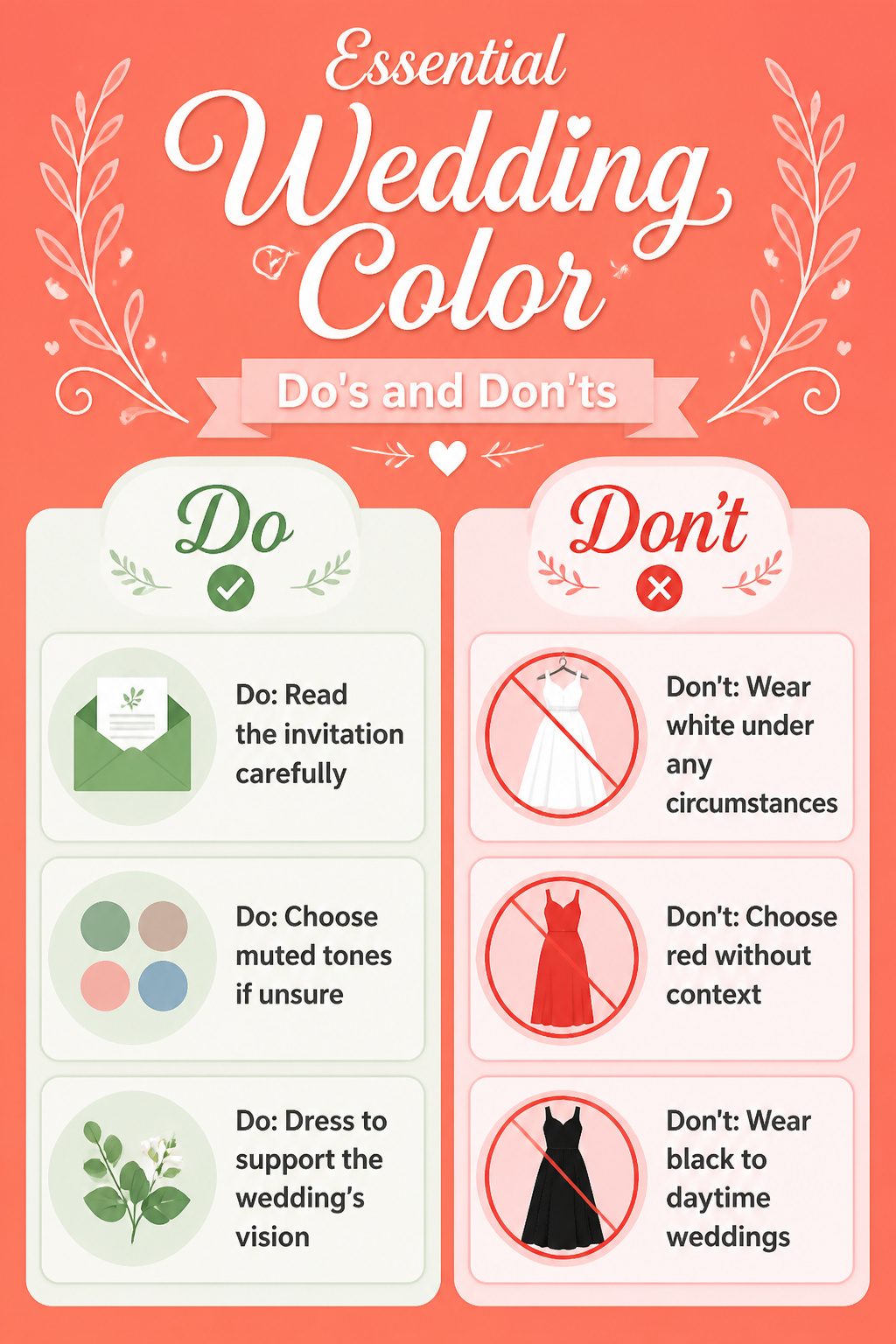
White is the one color that remains off-limits, and the reason has nothing to do with old superstition. In American weddings, the bride’s white dress signals the ceremonial center, and a guest in that shade splits the room’s focus. You risk becoming the story she tells later, and not kindly.
Red demands more care than most guides admit. At Chinese-American celebrations, it carries celebratory weight, but wearing it requires knowing whether the family treats it as festive or reserved for honored elders. When you are unsure, steer toward coral or wine rather than true red.
Black works at evening receptions, yet it falls flat at morning ceremonies where light reads as open and warmth. The context you need sits on the invitation: the hour, the venue, whether the couple named a cultural tradition alongside their own.
Your safest move is reading what the wedding already tells you, then dressing to support it rather than interpret it yourself.
A-Line and What Flatters Most Figures

An A-line dress narrows at the shoulders and flares gently toward the hem, following the shape of a capital A. That structure is what makes it the safest cut when you do not know the exact dress code. The flare gives room through the midsection and hips without clinging, so it reads as polished on most figures without requiring precise tailoring.
For a casual outdoor wedding, look for softer A-lines with ruffles or a tiered skirt. The movement keeps the look relaxed and keeps you from showing up overdressed next to guests in sundresses. At a formal evening wedding, switch to a structured A-line in a heavier fabric with a defined waist and minimal ornament. Same silhouette, entirely different register; the dress code lives in the finishing, not the shape itself.
The risk with A-line is defaulting to it too automatically. A very full skirt on a petite frame can overwhelm, and a stiff structured version on a fuller figure can add visual bulk where the cut is supposed to streamline. Try the dress seated; the flare should fall cleanly, not pool around your hips or ride up.
Shoes and Jewelry That Finish the Look

Buy the shoes before the dress is altered, or you may end up with a hem that drags on grass or rides too high in heels you never tested. A three-inch heel on concrete drops to the ground in soft turf, so bring the actual pair to the fitting and walk outside if the venue is outdoors. For a black-tie wedding, a thinner heel and finer strap read correctly; a barn or garden party lets you go lower and wider without looking underdressed.
Metal matching matters when the dress has hardware. A gold zipper pull or buckle on the dress and silver jewelry on your ears will fight each other in photos. Pick one metal and run it through earrings, bracelet, and shoe buckle if there is one. The common error is treating shoes as an afterthought, ordered online after the dress is already tailored. You need the heel height fixed to know the skirt length, and you need to wear both together for an hour to learn where the shoe rubs. A blister discovered at the reception is not fixable with a safety pin.
Frequently Asked Questions
What should I wear to a wedding as a guest?
Pick a dress that matches the dress code on the invitation, then adjust for the venue and time. A black-tie optional card at a 4 p.m. garden party still calls for lighter fabric and a shorter hem than the same wording for an 8 p.m. hotel ballroom. When the code is unclear, match the ceremony location’s formality rather than exceeding it.
What colors should wedding guests avoid?
White remains off-limits because it splits the room’s focus from the bride in American weddings. Red demands care too: at Chinese-American celebrations it can signal celebration or honored status, so steer toward coral or wine if you are unsure of the family’s custom. Black works for evening receptions but falls flat at morning ceremonies.