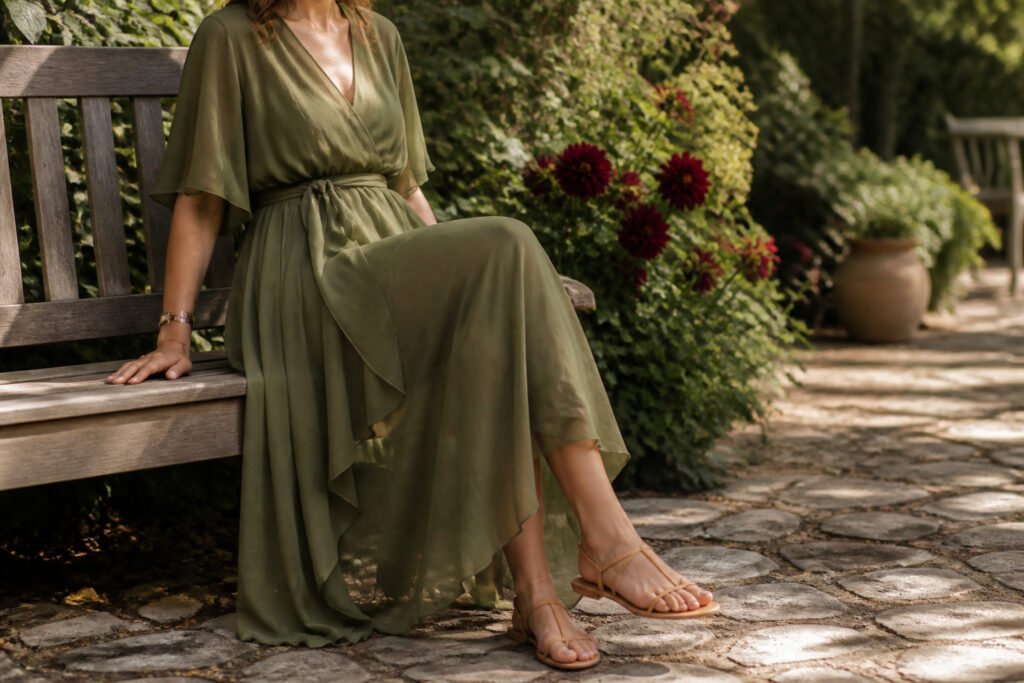
Casual wedding guest outfit ideas are clothing choices that sit one step above everyday wear, relaxed in silhouette but still polished enough to honor the occasion. The catch is that "casual" on a wedding invitation does not mean jeans or gym wear, even when the couple writes "come as you are." Linen, cotton, and breathable chiffon set the right tone, and the safest move is always slightly overdressed rather than under.
What Casual Wedding Attire Means

Casual wedding attire sits one step above your everyday clothes. You are not dressing for the office or a Saturday errand, but you are also not reaching for anything that belongs at a black-tie affair. Breathable fabrics like linen and cotton, lighter colors, and relaxed silhouettes set the tone. Jeans and gym wear stay home, no matter how laid-back the couple may seem. The invitation itself is your first clue; phrases like "come as you are" signal ease, yet that ease still expects polish. Carrie Goldberg of CLG Creative put it plainly for Vogue:
"Casual wedding attire, or ‘come as you are,’ is the host’s permission to skip formalities—but it’s not an invitation to arrive unpolished."
Think of it as a step or two down from cocktail dress. Heels and ties are not required, but the effort should still read as intentional.
Women’s Flowy Midi Dresses

A flowy midi dress lands you right in the sweet spot between dressed-up and relaxed, which is exactly where a casual wedding asks you to be. The hem hits somewhere between the knee and ankle, so you get movement without the formality of a full-length gown, and the loose cut means you can actually sit through a long toast without adjusting your waistband every three minutes.
For summer weddings, cotton and chiffon are the fabrics to look for. They breathe in outdoor heat and catch a breeze the way heavier silks or satins never will. Floral prints and pastel hues read celebratory without trying too hard, and they photograph well against grass or sand if the couple chose a backyard or beach venue.
The silhouette works because it does not compete with the setting. A structured sheath or bodycon dress can feel overdressed for a laid-back afternoon; a maxi can drag in dirt or trip on stairs. The midi floats above both problems. Pair it with strappy heeled sandals and simple drop earrings, and you are done without looking like you tried to be done.
Women’s Wrap Dresses

A wrap dress tends to work on almost every body because the waist tie lets you set the fit yourself, pulling it higher or lower depending on where you want emphasis. That same adjustment makes it one of the more reliable options across casual wedding venues; tighten it for a garden party with heels, loosen slightly and pair with flats for a beach club where you are walking on sand. The style also sits right on the casual dress code line that still expects some elevation beyond everyday clothes. You get the structure of a dress without rigidity, and the crossover front reads as intentional rather than thrown-together. If you are pregnant or early postpartum, the wrap format is particularly forgiving because the gathered fabric at the sides expands and contracts with you, and you can secure the tie above an active center of gravity rather than fighting a fixed waistband. The only real risk is the skirt gaping open if the tie slips during dancing, so test a few twirls at home and consider a hidden snap or safety pin at the neckline if the wrap is cut deep.
Women’s Jumpsuits
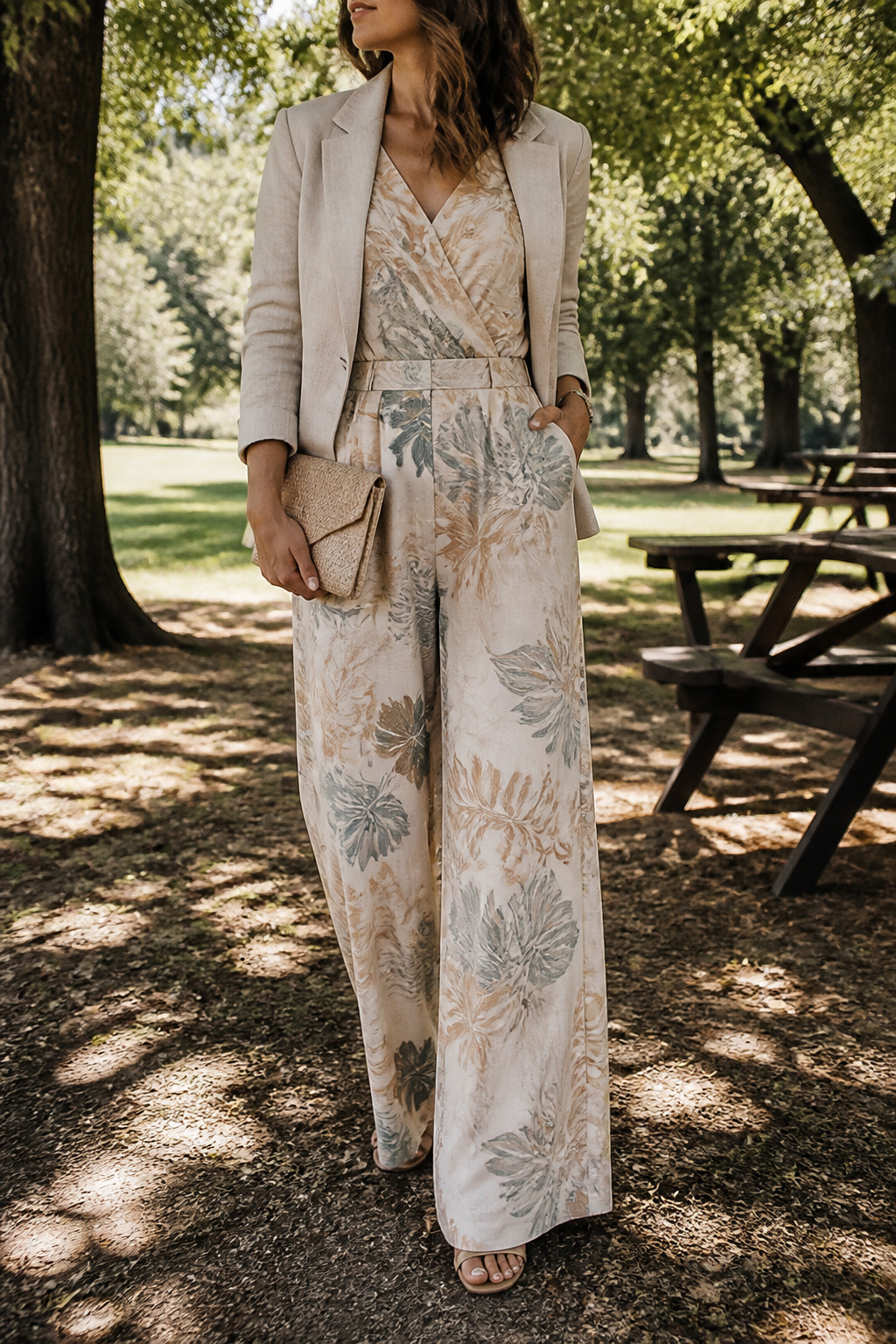
A tailored jumpsuit in lightweight fabric reads as intentional where a romper reads as off-duty. The difference is structure: a defined waist, a clean line through the leg, and fabric that drapes rather than clings. Adrianna Papell cuts theirs with this in mind, though the same principle holds at any label you favor.
For a backyard or park ceremony, pair it with a light layer you can actually wear. The sun drops, the speeches run long, and a linen blend jacket or a soft scarf saves you from shivering through the cake cutting. Breathable fabrics like chiffon or a linen blend keep the look casual without sliding into sloppy.
Prints work here in a way they rarely do in cocktail attire. A playful pattern under open sky feels right; under ballroom chandeliers it fights the room. Keep the accessories simpler than you would for a dress. A jumpsuit already carries enough shape to stand alone.
The fit across the shoulders and seat matters more than with a dress, because there is no skirt to skim or distract. If the torso pulls or the waist gaps, the whole piece looks borrowed. Tailoring is worth the cost for this reason alone.
Casual Mother-of-the-Bride Dresses

A midi mother-of-the-bride dress with soft silhouettes lands you in the right zone for a casual wedding without looking underdressed. Think lace detailing or elegant draping rather than the structured satin and full-length gowns that signal formal mother-of-the-bride expectations.
For a backyard ceremony or recovery brunch, you want one step down from cocktail attire, not two steps down into sundress territory. Heels are not required, but the fabric should still feel considered: a nicer weave, a cleaner line, something that moves well when you sit.
The common mistake is treating "casual" as permission to arrive unpolished. The invitation says come as you are, but that still means pressed, neat, and slightly toward dressy rather than toward the jeans-and-nice-top end of the scale. When you are unsure, being slightly overdressed beats being underdressed, and a soft midi in a muted tone threads that needle cleanly.
Plus-Size Casual Wedding Options

The same casual wedding calls for the same choices; fit is where the work lands. The shoulders, bust, and hips are the three points that matter — get them right and the rest follows. An empire waist or A-line cut gives you structure without clinging, and a wrap design lets you adjust as the day stretches from ceremony to dancing. Chiffon or satin blends hold their shape through a long reception while still letting you move, eat, and breathe. Skip anything that needs a compression layer to look smooth; supportive underlayers should do the job without the squeezed feeling. For a beach or outdoor wedding, a maxi in lightweight linen or a sleeveless cut with some flow keeps you cool without looking underdressed. The point is to dress for the event, not for a category.
Casual Beach Wedding Dresses

A beach wedding is the one casual setting where you can let the location do the heavy lifting. The dress should move like it wants to be there, which means reaching for chiffon, cotton, or linen rather than anything structured. A maxi in a tropical print reads intentional, not underdressed, and the same goes for a sleeveless cut that lets the breeze through.
Length matters more than you might think. Midi dresses hit the right note for most casual weddings, but on sand they can catch wind awkwardly and leave you adjusting every few steps. A true maxi or a shorter flowy cut both work better than that in-between zone.
What separates beach casual from a backyard or ranch wedding is the resortwear edge. Sandals are expected here in a way they are not elsewhere, and a caftan or breezy slip dress fits the mood without looking like you missed the dress code entirely. Denim would feel out of place; a floral midi that works in a garden reads slightly formal against the water. Let the setting pull you toward lighter colors and looser shapes, and you will look like you understood the assignment.
Men’s Button-Down Shirts With Chinos

A crisp, well-fitted button-down shirt paired with chinos is the go-to look most men reach for when a wedding invitation says casual. Light colors and pastel shades work best for daytime events, where the sun does the work of making you look dressed up rather than dressed for the office.
The fabric matters more than the cut. A standard broadcloth or poplin in white or pale blue reads as business casual; the same shirt in linen, a soft chambray, or a subtle texture shifts the register toward weekend celebration. For summer weddings, that breathability also keeps you from looking wilted by the cocktail hour.
Chino color is where you separate from the cubicle. Khaki and navy are safe, but olive, stone, or a muted rust move the outfit into territory that says you dressed for a party, not a presentation. The fit should be trim, not tight; you want to sit comfortably through a ceremony without the waistband digging in.
What pulls this above everyday office wear is the finishing. Roll the sleeves to just below the elbow rather than buttoning the cuff. Add leather loafers, boat shoes, or clean dress sneakers, never the athletic pair you run in. Skip the tie, but consider a lightweight blazer if the reception runs into evening. The jacket is not required for casual, yet it will not leave you feeling out of place if you enjoy the structure.
Men’s Polo Shirts and Dress Pants

A polo shirt with dress pants walks a narrower line than most guests expect. The sources split on what makes it work: one calls it sharp yet laid-back for a truly relaxed setting, while the other warns against anything in a sporty golf-shirt material. That distinction matters more than the color or the fit. The wrong fabric reads like you came from the clubhouse, not the ceremony.
Solid colors or subtle patterns keep the look intentional. Pair it with tailored dress pants, not chinos, and you have enough structure to avoid looking underdressed. Skip this combo entirely for evening weddings or anywhere the invitation hints at dressy casual; the polo does not recover once the sun goes down. Loafers or clean leather dress sneakers finish it, but never athletic styles. If you are unsure whether the setting is relaxed enough, a button-down is the safer move.
Men’s Linen or Cotton Blazers

A lightweight blazer is the piece that takes you from "nice shirt" to "dressed for a wedding" without crossing into boardroom territory. For evening events especially, that extra layer signals you understood the assignment. The trick is choosing the right weight.
Linen and cotton blazers breathe and move in a way wool does not. Pure linen wrinkles; a linen blend keeps you sharper through the dancing. Cotton sits slightly heavier, more structured, still nothing like the fused canvas of a formal suit jacket. You want an unstructured shoulder, soft construction, maybe a half lining or none at all.
Skip the navy worsted you already own for interviews. The color can stay similar, but the fabric and build should read warm-weather, relaxed, intentional. Pair it with chinos or dark denim, a crisp button-down or even a clean white tee underneath if the wedding skews younger. Loafers or leather sneakers finish it. The blazer does the work of dressing up; everything else can stay easy.
Men’s Dressy Casual Attire

Dressy casual means you move one step toward cocktail attire without crossing the line. For men, that translates to a collared shirt, chinos, or dark denim paired with a structured blazer and dressy shoes.
Dark denim has a narrow window. Bring it only to a very rustic barn or country ceremony, and then only in dark indigo with zero rips or fading. Pair it with a crisp shirt, a structured blazer, and dressy shoes. If the venue is indoors or the invite mentions "smart" or "dressy" casual, leave the denim in the closet. Even when the invite says casual, it is still a wedding, not a trip to the hardware store.
Chinos are the safer bet. They read polished without pushing into semi-formal territory, and they work across more venues. When in doubt, being slightly overdressed beats being underdressed.
Men’s Semi-Casual Attire

A sports coat over a dress shirt sits one step below semi-formal and one clear step above showing up in just a button-down and slacks. You are not wearing a full suit, and you are not wearing a tie. That is the point. The combination reads as intentional without reading as office-bound.
The dress shirt keeps the line sharp; the sports coat adds structure that says you understood this was still a wedding. Skip the shiny worsteds and the padded shoulders that look borrowed from a boardroom. A softer shoulder, a textured weave, something that moves when you move, keeps the look from drifting into territory that feels wrong for a backyard ceremony or a brunch reception.
Pair it with well-fitted slacks or chinos, not denim. The chino route leans more casual; the slacks lean more polished. Either works, but the coat is doing the work of bridging the gap, so let it. Footwear should follow the same logic: loafers or clean leather dress sneakers, not running shoes, not oxfords that belong with a suit and tie.
This is the outfit for when the invitation says casual and you know the couple well enough to suspect they mean it, but you still want to look like someone who owns an iron.
What to Avoid

Even at a casual wedding, some pieces cross from relaxed into disrespectful.
Leave these in the closet:
- Ripped jeans. Distressing reads as careless, not intentional. The one exception: dark indigo denim with zero rips or fading, worn only at a rustic barn or country venue, paired with a structured blazer and crisp shirt. Indoor or "smart casual" invite, and denim stays home.
- Graphic tees. Novelty slogans and big logos pull focus from the couple.
- Flip-flops. Only passable if you are literally standing in sand. Otherwise, wear a real shoe.
- Gym wear. Yoga pants, tracksuits, sweatpants, jerseys, and athletic shorts belong at the gym, not a celebration.
- Visible wear. Anything stained, torn, or wrinkled beyond what intentional linen does naturally goes in the laundry, not to a ceremony.
When you are torn between two options, choose the more polished one. No one regrets looking slightly too put-together.
Footwear by Venue

Most casual wedding guest outfit ideas fall apart from the ankles down. You look great in the mirror and then sink three inches into lawn the moment you step outside.
Block heels or wedges save you on grass. They spread your weight enough that you are not aerating the garden with every step. For gravel paths or mulch, structured flats or low block heels keep you stable; thin soles leave you wobbling on every uneven stone.
Clean sneakers can work, but only at very relaxed daytime outdoor or backyard ceremonies. They need to be spotless, minimal leather or canvas in a neutral tone. The difference between intentional and lazy is condition and material. Scuffed gym trainers look like you grabbed what was by the door. Sleek leather in off-white or tan looks like you chose them for the outfit.
Break in any new shoes a week early by wearing them around the house with thick socks. A blister stick on your heels beats hobbling through the reception.
Layering for Weather

Outdoor weddings move through three temperatures in a single afternoon. You will feel it during the ceremony, then again when the sun drops and someone opens the barn doors for dancing. A light layer you can actually wear all day beats a coat left in the car.
Start with cotton or a lightweight knit against your skin. A linen blend works better than pure linen here; it breathes without the creases that read as careless by evening. For women, a cropped denim jacket, soft pashmina, or tailored blazer each solve the problem a different way. The blazer photographs cleanest after dark. Men in chinos and a button-down gain the same flexibility from an unstructured cotton blazer or a neat overshirt; structured cardigans work too, though they edge closer to office wear.
Watch the hem if rain threatens. A wet skirt dragging through grass ruins the look faster than any layer could save it.
Casual, Dressy Casual, and Smart Casual

The three dress codes sit on a single sliding scale of polish, and the difference between them is one or two deliberate upgrades in fabric, structure, or shoe.
| Casual | Dressy Casual | Smart Casual | |
|---|---|---|---|
| Base pieces | Sundress, chinos, crisp button-down | Collared shirt, dark denim or chinos | Blazer, dress shirt, tailored slacks |
| Fabrics | Cotton, linen, lightweave | Same, but pressed and darker | Silk blends, wool, structured cotton |
| Footwear | Clean loafers or leather sandals | Loafers, desert boots | Leather oxfords, brogues |
| The move that upgrades | Adding a lightweight linen blazer | Swapping denim for chinos or adding a sports coat | One step toward cocktail: full structure, no denim |
Casual still means neat, not Saturday errands. The passages note that even dark indigo denim needs zero rips, a structured blazer, and dressy shoes to survive a rustic venue. Leave it home indoors. Dressy casual and smart casual share the same rung, so when in doubt, move one step toward cocktail rather than risk underdressing. The safest call is the slightly sharper version of whatever you own.
Frequently Asked Questions
What should I wear to a casual wedding?
Women can reach for a flowy midi dress, a wrap dress, or a tailored jumpsuit in breathable fabrics like cotton, linen, or chiffon. Men do well with a crisp button-down and chinos, or a polo with dress pants if the setting is truly relaxed. The goal is polished without formal: one or two steps above everyday clothes, never office wear or black-tie.
Can I wear jeans to a casual wedding?
Almost always no. The only exception is a very rustic barn or country ceremony, and then only dark indigo denim with zero rips or fading, paired with a structured blazer, crisp shirt, and dressy shoes. If the venue is indoors or the invite says "smart" or "dressy" casual, denim stays home.
Are clean sneakers okay for a casual wedding?
Yes, but only at very relaxed daytime outdoor or backyard ceremonies, and only if they are spotless, minimal leather or canvas in a neutral tone. Scuffed gym trainers read as lazy; sleek off-white or tan leather reads as intentional. When unsure, loafers or block heels are the safer call.